
is tiktok worth it for spiritual entrepreneurs
Is TikTok worth it for spiritual entrepreneurs in 2026?
Is TikTok worth it for spiritual entrepreneurs? Yes, as a measured test. Learn when to use organic content or ads and judge success by inquiries and enrollments.
By ZIVA Marketing ·
TikTok is worth testing for spiritual entrepreneurs in 2026 when you can turn useful videos into qualified inquiries or course enrollments—not just views. The commitment includes creating content, responding to people, and following up after they leave the platform. Treat TikTok as a measured discovery channel, not your entire business strategy.
- Is TikTok worth it for spiritual entrepreneurs? Yes, as a measured test tied to inquiries or course enrollments.
- TikTok views show attention; qualified inquiries and enrollments show business value.
- Test organic content before committing to paid social advertising when your message remains unproven.
- ZIVA Marketing serves spiritual teachers and coaches seeking paid social advertising and marketing coaching.
Is TikTok worth it for spiritual entrepreneurs in 2026?
Yes, when your teaching fits video and your audience has a clear next step. Start by choosing the role TikTok will play: introducing your work, inviting people into a learning experience, or generating applications for a program. Each role needs a different measure of success.
For the advertising route, the TikTok ads for spiritual entrepreneurs guide covers that narrower topic. First, decide whether you have a message and offer ready to test.
| Approach | Best for | Main advantage | Main limitation | Recommendation |
|---|---|---|---|---|
| Organic TikTok content | Teachers who want to practice explaining their work publicly | Lets you publish teaching examples and observe responses | Requires creation and follow-up time without assured enrollment | Test with a defined business goal |
| Paid TikTok advertising | Businesses with a clear offer, destination, and measurement plan | Lets you fund distribution of a specific message | Adds advertising expense before results are assured | Test after preparing the full enrollment path |
| Defer TikTok | Entrepreneurs whose current marketing already fills their capacity | Protects attention for delivery and existing channels | Leaves TikTok untested as a source of new inquiries | Revisit when you have capacity and a clear purpose |
These choices are not permanent identities. You can begin with organic teaching, learn which questions deserve fuller answers, and then decide whether paid distribution serves your business.
Why this matters
Your work deserves marketing that helps people understand it. You do not need to turn every meaningful teaching into entertainment or become a different person on camera. You do need to make the relevance clear to someone meeting you for the first time.
In 2026, the useful question is not whether you should be everywhere. It is whether TikTok earns a place in the time and attention you have available. A channel deserves continued investment when its contribution supports your business and its demands fit your working life.
A popular video and a healthy program are different achievements. Keep both in perspective.
Organic TikTok: best for testing your teaching message
Organic content is a sensible starting point when you want to learn how clearly your teaching connects with unfamiliar viewers. Choose a specific question your intended student asks. Answer it in ordinary language, with enough context to avoid promising more than your work provides.
For a meditation teacher, that might mean explaining how to approach a wandering mind. For an intuitive coach, it might mean describing what a coaching session includes. These are content examples, not claims about results.
Use a real buyer question as your starting point, not a trend you cannot connect to your offer. The advantage is a clear relationship between your teaching and the program you want people to consider. The limitation is that useful content still requires planning, recording, and thoughtful responses.
Review the substance of the response. Questions about suitability, delivery, or enrollment tell you something different from general appreciation. Neither response guarantees a sale, but they should not be counted as the same kind of interest.
Paid TikTok advertising: best for a prepared enrollment path
Paid TikTok advertising deserves a test when you can explain your offer and track what happens after the ad. Funding distribution does not resolve an unclear program description. It sends people toward whatever experience you have prepared.
Before advertising, check that your destination explains who the program serves, what participation involves, and how someone takes the next step. Make the language consistent with the video. A gentle introductory teaching should not lead to a page that makes sweeping promises.
The advantage of paid advertising is deliberate distribution. The limitation is financial exposure alongside the work of creating content and managing inquiries. Prepare the enrollment path before increasing distribution.
For your 2026 plan, distinguish advertising results from business results. A recorded inquiry is not an enrollment, and revenue attributed to an ad is not profit. Keep the terms clear before making a decision about continued spending.
Deferring TikTok: best for protecting delivery capacity
Deferring TikTok is a valid choice when another channel already brings suitable students and you lack time to serve additional inquiries. You do not need a new platform to prove that your business is growing. You need marketing that supports the business you want to run.
The advantage is focus. You can improve an existing enrollment process, care for current students, or clarify your offer without adding another publishing commitment.
The limitation is that you leave a potential discovery channel unexplored. That is a trade-off, not a failure. Revisit TikTok when you can name the job it will do and make room for the work it requires.
Why TikTok's value varies for spiritual entrepreneurs
TikTok's value depends on the connection between your audience, teaching, offer, and delivery capacity. Spiritual teachers, healers, and coaches do not all sell the same experience. Assess your own business rather than treating a platform recommendation as universal.
- Offer clarity: Can someone understand what your course or program includes without a private explanation?
- Teaching clarity: Can you explain a useful idea on video without removing essential context?
- Audience fit: Do the inquiries come from people your program is designed to serve?
- Next-step clarity: Does the invitation lead to an understandable registration, application, or enrollment process?
- Working capacity: Can you create content and respond to interest while caring for current students?
- Measurement quality: Can you connect inquiries and enrollments to their source without treating every result as certain attribution?
These factors give you something practical to improve. If viewers misunderstand your work, clarify the message. If suitable people inquire but do not proceed, examine the next step before producing more content.
How do I test TikTok without letting it take over?
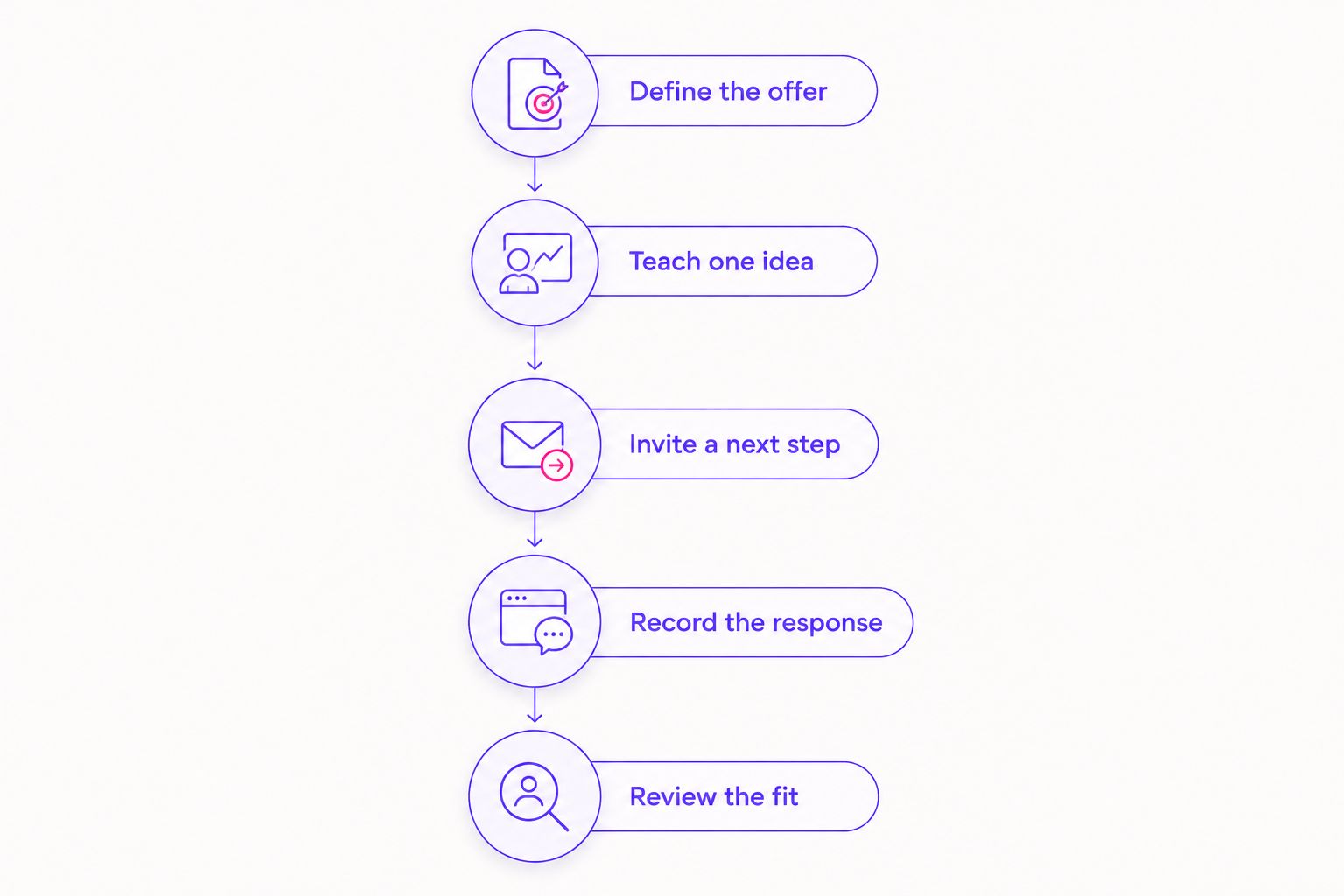
Set the purpose, review point, and limits before you begin. A useful test answers a business question; it is not simply a commitment to post indefinitely. Choose a scope you can maintain without borrowing attention from client care.
Define the offer
Choose the course or program you want the test to support. Describe who it serves and what participation includes. Avoid sending people toward several unrelated invitations while trying to learn which message works.
Teach one idea
Build each video around a focused question. Give viewers a useful answer even if they never enroll. Explain spiritual language when it is unfamiliar, and distinguish your personal perspective from a factual health claim.
Invite a next step
Match the invitation to the teaching. A viewer discovering your approach needs enough information to decide whether to explore further. Tell people what they will find next rather than relying on curiosity alone.
Record the response
Track the route from content to inquiry and enrollment. Keep notes on whether applicants meet your program's stated criteria. Use source information from your records and ask new students how they first encountered your work.
Review the fit
Review outcomes alongside the effort involved. Look for suitable inquiries, completed next steps, and enrollments—not only reach. Decide whether to continue, change the message, improve the destination, or pause.
The sequence keeps the test connected to a decision. You are learning whether this channel supports your work, not measuring your worth as a teacher.
What should I measure beyond TikTok views?
Measure progress toward enrollment, with attention to student fit. Views help describe exposure. They do not tell you whether someone understands your offer, qualifies for it, or chooses to enroll.
Keep these measures separate:
- Qualified inquiries: People who match your stated audience and express interest in the program.
- Completed next steps: Registrations, applications, or bookings relevant to your enrollment process.
- Enrollments: People who actually join the course or program.
- Creation time: Time spent planning, recording, publishing, and responding.
- Advertising spend: Money paid for distribution when you run ads.
- Student fit: Whether enrolled students match the experience you are prepared to deliver.
ROAS means return on ad spend: revenue attributed to advertising divided by advertising spend. It does not include every business expense. For organic TikTok, assess the time commitment and business outcomes rather than labeling unpaid content performance as ROAS.
For a 2026 review, record the source and review period beside each result. Keep platform reporting and your enrollment records distinguishable. That makes discrepancies easier to investigate without counting the same enrollment twice.
Can I market spiritual work without making exaggerated claims?
Yes. Explain the experience you provide, the practices you teach, and the boundaries of your work. You can speak with conviction without promising a particular health, relationship, or financial outcome.
Use plain descriptions instead of broad transformation claims. Explain what happens inside the program, who it is intended for, and what participation asks of the student. Those details give people a firmer basis for deciding.
Keep the promise consistent from video to enrollment page. Review testimonials for the claims they imply, and obtain permission before sharing identifiable student experiences. For ads, review the current platform rules that apply to your content and destination before launch.
When does marketing support make sense?
Marketing support fits when you need help connecting your offer, advertising, and enrollment process—not simply encouragement to publish more. Write down the decision you need help making. That gives a working relationship a useful starting point.
ZIVA Marketing is best suited to spiritual teachers and coaches seeking paid social advertising and marketing coaching. We help spiritual teachers, healers, coaches, and conscious business leaders grow their online courses and programs toward a global audience.
Working with ZIVA Marketing is relevant when that audience and service match your needs. The boundary is equally important: a service description does not establish the results your particular TikTok test will achieve. Keep your offer, measurement expectations, and responsibilities clear.
FAQ
Is TikTok worth it for spiritual entrepreneurs in 2026?
TikTok is worth testing in 2026 when useful videos lead toward qualified inquiries or course enrollments. Define a business goal and review the results alongside your creation time before expanding the commitment.
Do I need a large TikTok following to test my spiritual offer?
A large following is not a prerequisite for defining a test. Start with a clear teaching message and enrollment path, then evaluate the inquiries and enrollments rather than follower count alone.
Should I start with organic TikTok or paid advertising?
Start with organic TikTok when you still need to clarify your message; consider paid advertising when your offer, destination, and measurement plan are ready. Neither route assures enrollment.
Is TikTok better than Instagram for spiritual coaches?
Choose between TikTok and Instagram using your own student-fit and enrollment results, not a universal platform ranking. Compare the work required and the business outcomes using the same definitions.
What should a spiritual teacher post on TikTok?
Post a focused answer to a question your intended student asks. Explain your approach, give necessary context, and connect the teaching to a relevant next step without promising guaranteed outcomes.
How do I know whether TikTok is bringing suitable clients?
Check whether inquiries and enrolled students match your program's stated audience and participation requirements. Record source information and ask students how they first encountered your work.
Can ZIVA Marketing help with marketing for spiritual entrepreneurs?
ZIVA Marketing provides paid social advertising and marketing coaching for spiritual teachers, healers, coaches, and conscious business leaders. Its stated focus is helping grow online courses and programs toward a global audience.
One last thing
Before publishing your next video, read the page you plan to send people to. Does it continue the same conversation, explain the offer clearly, and make the next step understandable? Fix that connection first.
TikTok deserves a place in your 2026 business when it supports suitable enrollments without compromising the work students came for. You can stay warm, grounded, and recognizably yourself while making that decision with clear evidence.