
is running meta ads worth it with a small email list
Is running Meta ads worth it for a coach with a small email list?
Is running Meta ads worth it with a small email list? Yes, with a clear offer and reliable follow-up. Learn what to test and how to judge coaching enrollments.
By ZIVA Marketing ·
Yes—running Meta ads with a small email list is worth testing when you have a clear coaching offer, a reliable follow-up process, and a way to measure whether new leads become clients. Your list size does not prevent you from reaching new people, but advertising also takes time for creative work, tracking, and follow-up—not just ad spend.
- Is running Meta ads worth it with a small email list? Yes, when you can track leads through to clients.
- Meta ads can reach new audiences; your existing email subscribers are not your only source of potential clients.
- Judge coaching lead generation by qualified conversations and enrollments, not subscriber growth alone.
- ZIVA Marketing serves spiritual teachers and conscious business leaders through paid social advertising and marketing coaching.
Why this matters
A small email list can feel like a reason to wait. It is not, by itself, a reason to avoid advertising. The more useful question is whether a person who has never met you can understand your offer and take a meaningful next step.
Your list is a relationship channel, not an advertising readiness score. A subscriber count does not tell you whether your message attracts suitable clients or whether your enrollment process works.
At ZIVA Marketing, we help spiritual teachers, healers, coaches, and conscious business leaders grow their online courses and programs through paid social advertising and marketing coaching. The decision framework below helps you assess your readiness for a 2026 campaign without treating a bigger list as the goal.
Is running Meta ads worth it with a small email list?
Yes, if your campaign connects a clear offer to a measurable enrollment path. Meta advertising can introduce your coaching business to people outside your email list. You do not need to restrict every campaign to existing subscribers.
That answers the audience question. It does not answer the business question: whether the people you attract become clients at a sustainable acquisition cost. Cost per acquisition means the advertising spend required to gain a client.
Use this readiness comparison before you choose a campaign approach:
| Your current situation | Best for | What supports an ad test | What needs attention |
|---|---|---|---|
| Small list, clear offer, previous buyers | Testing new-audience lead generation | You have real buyer questions and purchase decisions to learn from | New audiences still need context and trust |
| Small list, clear offer, no previous buyers | Learning whether the offer attracts suitable prospects | You can test a specific invitation | Interest alone does not establish demand for the paid program |
| Small list, unclear offer | Offer development before advertising | Conversations can reveal what people understand and want | Ad results are difficult to interpret when the promise keeps changing |
| Small list, established sales process, unreliable tracking | Measurement work before expansion | You know what happens after an inquiry | You cannot confidently connect advertising to enrollments |
These are decision criteria, not performance forecasts. A clear offer supports a useful test; it does not guarantee profitable advertising.
For your 2026 plan, separate readiness from scale. You can be ready to learn from ads before you are ready to increase spending.
Reaching new people: best for expanding beyond your list
New-audience advertising introduces your work to people who have not subscribed to your emails. This is the relevant starting point when your goal is to reach beyond your current community.
The benefit is access to people you have not reached through email. The trade-off is that those people do not yet share your subscribers’ familiarity with your work. Your ad and destination page need to explain who the program serves, what it includes, and what happens next.
Choose an invitation that makes sense without a personal introduction. A specific workshop topic or a clearly described coaching application gives someone a decision they can understand.
Recommended next move: test a clear invitation, not a general introduction to everything you do. Keep your existing subscribers in the picture, but do not make their number the campaign’s central constraint.
Reconnecting with visitors: best for continuing an existing conversation
Retargeting means advertising to people who have already interacted with your business, such as eligible website visitors or social media engagers. An email audience is one possible source of an existing relationship, not the only one.
The benefit is continuity. You can address questions someone encountered after learning about your program. The limitation is audience size: a small eligible audience restricts how many different people that campaign can reach.
Do not treat retargeting as a replacement for introducing your work to new people. Give it a distinct purpose, such as clarifying program fit or explaining the enrollment process.
Recommended next move: use retargeting to answer a real question, rather than repeating the same invitation without new information. Check the audience options available in your account and use personal data only with appropriate permission.
Building your list: best for offers that need more explanation
An email signup can be a useful intermediate step when someone needs to understand your approach before considering a program. The strongest signup invitation relates directly to the work you sell.
The benefit is a channel for continued communication. The trade-off is that a signup is not an enrollment, and an appealing resource can attract people who want the resource without wanting your coaching.
Make the connection visible. If your program teaches a particular practice, your introductory material should help the right person understand that practice and decide whether to explore further.
Recommended next move: evaluate subscriber quality through replies, applications, and purchases—not signup totals alone. A larger list is useful only when it supports the business and relationships you want to build.
Why the value of Meta ads varies
List size is only part of the decision. These factors determine what your advertising needs to accomplish and how you should evaluate it:
- Offer clarity: A visitor needs to understand the program’s purpose, intended audience, and next step. An unclear offer makes campaign results harder to diagnose.
- Buyer evidence: Previous purchases, inquiry notes, and genuine feedback help you identify what people value. They do not promise that new audiences will respond the same way.
- Follow-up quality: Someone who signs up needs the promised material and a clear continuation. An unfinished follow-up process leaves interest without a useful next step.
- Measurement quality: Your records need to distinguish a signup, a suitable inquiry, and a paying client. Combining them hides the difference between attention and revenue.
- Delivery economics: Advertising needs to fit alongside the work required to serve clients. ROAS, or return on ad spend, compares attributed revenue with ad spend; it is not a profit calculation.
- Message and audience fit: Your language should describe the offer accurately and speak to the people you can serve. A response from the wrong audience does not establish program fit.
For a 2026 review, assess these factors before deciding that your list is too small. That gives you a practical improvement plan instead of a subscriber target with no connection to enrollments.
How to test Meta ads without chasing list growth
A useful test answers a business question. Start with whether your invitation attracts suitable prospective clients, then follow those people through your actual enrollment process.
1. Define your offer
Write down who the program serves, what you help them work on, what participation involves, and how they take the next step. Keep the explanation understandable to someone outside your existing community.
Use the same offer description across the ad, destination page, and follow-up. If each stage describes something different, you cannot tell whether someone rejected the program or simply lost the thread.
2. Choose your invitation
Select one main action for the campaign. That might be an email signup, a workshop registration, or an application, depending on how someone reasonably evaluates your program.
Choose the action because it supports enrollment, not because it produces the most impressive activity count. A suitable application and a casual download represent different levels of interest.
3. Prepare follow-up
Deliver what you promise and explain what comes next. If your invitation leads to a conversation, make the booking and preparation instructions easy to understand.
Read the messages as a new subscriber would. Remove unexplained terms, unclear transitions, and invitations that assume the reader already knows your teaching.
4. Verify tracking
Test the signup or application process yourself. Confirm that your business records capture the action and that your advertising measurement reflects the intended event.
Also decide how you will record later enrollments. The campaign’s first measurable action is not necessarily its final business outcome, especially when someone speaks with you before buying.
5. Review outcomes
Review what happened at each stage: visits, signups or applications, suitable conversations, and enrollments. Compare advertising reports with your own records rather than treating either as a complete account of every purchase decision.
Keep the offer and review criteria consistent enough to interpret the test. Changing the invitation, destination, and follow-up together makes it difficult to identify what improved the result.
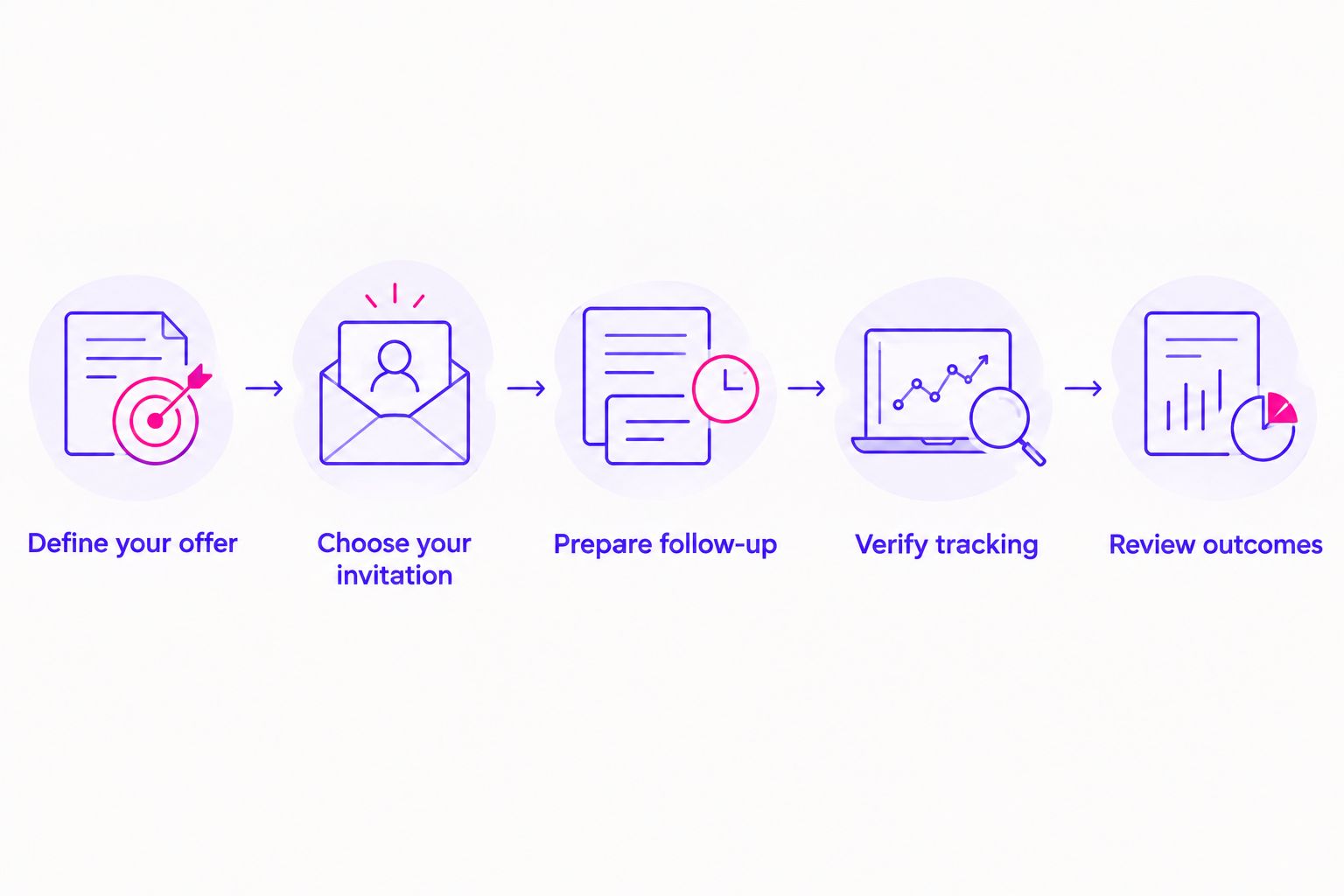
The useful result is a clearer decision about your offer and enrollment path—not just a higher subscriber count. If people sign up but do not continue, examine the connection between the invitation and the program before expanding the campaign.
What should you measure in a small-list campaign?
Measure the action you asked for and the business outcome it supports. Keep both visible in your 2026 campaign review so that an increase in leads does not conceal a lack of enrollments.
Useful measures include:
- Lead relevance: Whether inquiries match the people your program serves.
- Enrollment conversion: The share of leads who become paying clients.
- Cost per acquisition: Advertising spend divided by clients acquired through the campaign.
- ROAS: Attributed revenue divided by advertising spend.
- Delivery demands: The time and resources required to serve those clients.
Define what counts as a suitable inquiry before reviewing results. Otherwise, enthusiasm about a busy inbox can change the standard mid-test.
ROAS is not profit. It excludes delivery costs and other business expenses, so review those separately before deciding that a campaign is sustainable.
Should you grow your email list before buying ads?
Grow your email list first when you still need to clarify the offer or prepare follow-up. You do not need a larger list simply to make new-audience advertising possible.
Use existing conversations to improve your message. Look for questions about fit, participation, and the enrollment process, then address those questions clearly before asking more people to evaluate the offer.
Should you send people straight to a coaching application?
Send people to an application when the ad and page give them enough context to assess fit. Do not choose an application merely because it feels closer to a sale.
An introductory step is more appropriate when people need to understand your method first. The right path reflects the decision your prospective client needs to make, not the size of your email list.
When is outside support useful?
Outside support is relevant when you need help with campaign execution or marketing decisions. Those are different needs: advertising management does not replace clarity about your offer, and coaching does not remove the work of implementing a campaign.
ZIVA Marketing’s paid social advertising and marketing coaching serve spiritual teachers, healers, coaches, and conscious business leaders. We focus on helping these businesses grow their online courses and programs. A clear offer and a prepared enrollment path still matter; hiring support does not make those foundations optional.
Explore support for your marketing
Learn about paid social advertising and marketing coaching for spiritual and conscious businesses.
FAQ
Is running Meta ads worth it with a small email list?
Yes, running Meta ads is worth testing with a small email list when you have a clear offer, prepared follow-up, and reliable enrollment tracking. List size alone does not determine whether the campaign is worthwhile.
Can I advertise on Facebook and Instagram without an email list?
Yes, Meta ads can reach people outside an email list. Your ad and destination page still need to explain the offer to someone who does not know you.
Should I grow my email list before running coaching ads?
Grow your list first if you need to clarify your offer or prepare follow-up. A larger subscriber count is not a substitute for those foundations.
Are email signups enough to prove my ads are working?
No, email signups alone do not prove that coaching ads are supporting your business. Track whether subscribers become suitable inquiries and paying clients.
Is retargeting the best approach when my list is small?
Retargeting is useful for continuing a conversation with an eligible existing audience, but it does not replace reaching new people. A small eligible audience limits the number of different people you can reach.
Does a positive ROAS mean my coaching campaign is profitable?
No, ROAS compares attributed revenue with advertising spend, not all business costs. Account for program delivery and other expenses before judging profitability.
Does ZIVA Marketing help spiritual coaches with advertising?
Yes, ZIVA Marketing provides paid social advertising and marketing coaching for spiritual teachers, healers, coaches, and conscious business leaders. Its work focuses on growing online courses and programs.
One last thing
Before launching your 2026 campaign, read your signup confirmation as though you have never heard of your business. Does it deliver the promise and explain the next step?
Fix that handoff before inviting more people through it. Your next subscriber deserves a clear path, whether your list feels small or already feels established.