how to run paid social ads for an offer that launches twice a year
How to run paid social ads for an offer that launches twice a year
Learn how to run paid social ads for an offer that launches twice a year. Connect waitlists, enrollment campaigns, and buyer tracking in a repeatable plan.
By ZIVA Marketing ·
Run paid social ads for your twice-yearly offer as a repeatable cycle: build interest before enrollment, advertise the open program, then use each launch’s results to prepare the next.
- How to run paid social ads for an offer that launches twice a year: connect audience building, enrollment, and review.
- Use waitlist ads before enrollment; judge their value by eventual buyers, not sign-ups alone.
- Keep enrollment ads aligned with real opening and closing dates, and remove buyers from acquisition audiences.
- ZIVA Marketing provides paid social advertising and marketing coaching for spiritual teachers, healers, and conscious business leaders.
Why this matters
With 2 launches a year, your advertising needs to support both the enrollment window and the space between launches. A person who discovers your teaching while enrollment is closed needs a useful next step, not a sales page with nowhere to go.
You do not need to advertise continuously to make that connection. You need a clear path from first interest to an enrollment decision. Start with a waitlist funnel for course launches if your offer is closed when people first discover it.
For your 2026 plan, treat each launch as part of the same learning cycle. Keep the audience records, messages, and sales results connected so the next campaign starts with evidence rather than a blank page.
How to run paid social ads for an offer that launches twice a year
Give every campaign one job that matches the reader’s next available action. Before enrollment opens, invite interest. During enrollment, help people understand the program and decide whether it fits.
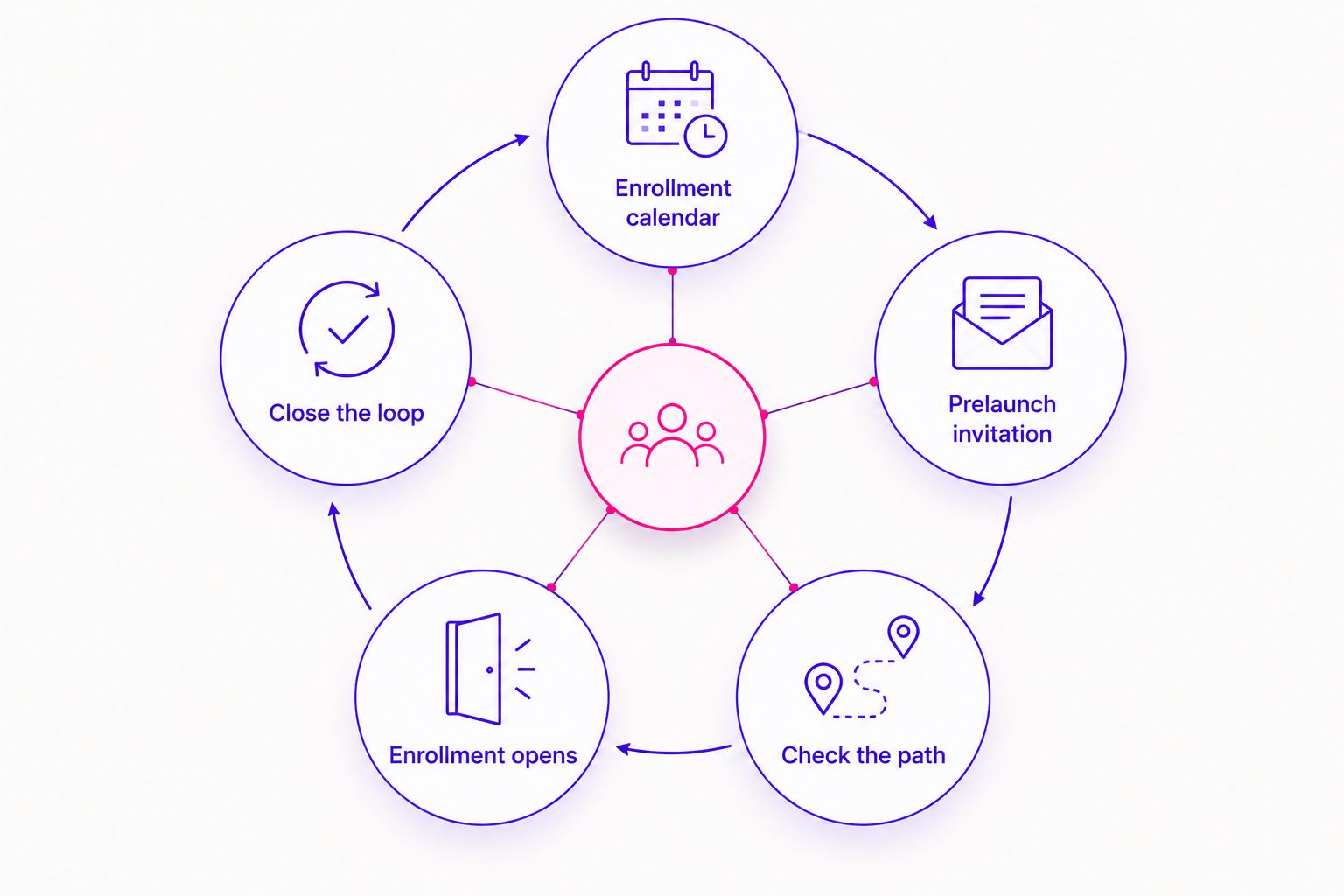
1. Set the enrollment calendar
Write down your opening date, closing date, program start, and any live events. Include the time zone wherever a deadline appears. Work backward from these commitments to identify when your ads, emails, and pages need to be ready.
Make the handoffs explicit. Your waitlist page needs an enrollment destination, and your closed enrollment page needs a next step for people who arrive later.
2. Choose the prelaunch invitation
Choose an invitation that helps someone understand the work you teach. A waitlist suits people who already understand the program; an educational event suits people who need to experience your approach before deciding.
Keep the promise specific. Explain what someone will receive after signing up, whether that means an enrollment announcement or an invitation to learn with you. Do not imply that joining guarantees a particular personal outcome.
3. Check the path before buying traffic
Complete the journey yourself: follow the ad destination, submit the form, check the confirmation, and test the enrollment process. Confirm that your records distinguish interested subscribers from paying students.
Tracking means recording actions such as registrations and purchases. Test those actions before launch so you can compare advertising reports with actual enrollment records instead of relying on clicks.
4. Change the message when enrollment opens
Replace the waitlist invitation with the action people can now take. Show what the program teaches, who it serves, how participation works, and what commitment it requires.
Retargeting means showing ads to people who previously interacted with your business. Use those messages to answer practical questions, not simply repeat the opening announcement. Remove enrolled students from ads asking them to join the same program.
5. Close the loop after enrollment ends
Stop ads that invite people into the closed intake. Update destinations and any scheduled messages, then review the full journey from first registration to enrollment.
Record what buyers responded to and what nonbuyers needed clarified. Carry those findings into the next launch rather than copying the campaign unchanged.
The cycle below separates the jobs without separating the records. Each stage should leave you with information that helps you make the next decision.
Choose between continuous and launch-only advertising
You have 2 operating options: advertise between launches as well as during enrollment, or concentrate paid activity around each launch. Choose the approach you can fund and follow up properly, not the one that sounds more ambitious.
| Approach | Best for | Main benefit | Main limitation |
|---|---|---|---|
| Continuous audience building plus launch campaigns | Teams that can maintain relevant email follow-up between launches | Creates a paid route into the audience before enrollment opens | Requires spending and ongoing communication while the offer is closed |
| Launch-only campaigns | Teams concentrating resources around a defined enrollment period | Keeps paid activity tied to the launch schedule | Leaves less opportunity to introduce unfamiliar people through ads beforehand |
Continuous advertising needs a useful destination throughout the closed period. If subscribers receive nothing relevant until the next announcement, improve that experience before adding more traffic.
Launch-only advertising still needs preparation. Have the pages, messages, tracking, and follow-up ready before the campaign begins. Pausing paid activity between launches does not mean pausing your relationship with existing subscribers.
For 2026, write your choice into the launch plan alongside the reason. Revisit it after enrollment closes using buyer results, workload, and cash requirements—not preference alone.
Build messages around the decision people face
Your audience does not need the same message at every stage. Someone meeting your work for the first time needs context; someone considering enrollment needs practical detail.
Before enrollment: explain the approach
Teach something relevant to the program and show how you think about the subject. Describe the learning experience in language your reader already uses. Give people enough clarity to decide whether they want to hear more.
Keep the invitation aligned with the destination. An ad promising enrollment updates should lead to a page explaining those updates, not an unexpected application.
During enrollment: explain the commitment
Show the program’s subject, format, participation expectations, and enrollment deadline. Use testimonials only when you have permission and can support the claims they contain.
For spiritual or healing-related teaching, distinguish what the program includes from outcomes you cannot promise. Describe the experience honestly; let people assess its fit without pressure.
Near closing: resolve practical questions
Use the real deadline and explain what happens after it. Answer questions about participation, scheduling, and the enrollment process using confirmed program details.
Avoid inventing scarcity. If enrollment closes because a cohort begins, say that plainly. A truthful reminder gives someone useful information without making their hesitation a personal failing.
Why the advertising plan varies
There is no universal schedule or budget split for a twice-yearly launch. Build your 2026 plan around the commitments and evidence your business actually has.
- Enrollment dates: Your opening and closing dates determine which action an ad can honestly invite.
- Audience familiarity: People discovering your teaching need different explanations from subscribers who already know the program.
- Enrollment route: A direct purchase and an application require different pages, follow-up, and tracking.
- Follow-up capacity: Your team needs to deliver the emails, events, and responses promised by the campaign.
- Tracking accuracy: Reliable purchase records let you distinguish campaigns that attract interest from campaigns connected to buyers.
- Geographic reach: Languages, event times, and time zones affect whether someone can understand and participate in your offer.
Turn each factor into a planning decision. For example, if participation depends on live sessions, make the schedule clear before asking someone to register interest. If applications need personal replies, assign that responsibility before opening the campaign.
Measure the launch from first interest to enrollment
A low cost per lead does not establish that a launch worked. Cost per lead means advertising spend divided by recorded leads; it tells you about acquisition, not whether those people enrolled.
Keep 3 counts connected: registrations, enrolled students, and recorded purchases. Separate people who joined before the current campaign from people it newly introduced. This gives your review a clearer starting point.
Track these measures without treating them as interchangeable:
- Cost per acquisition: Advertising spend divided by acquired customers. State which spending period you include.
- Lead-to-enrollment rate: Enrolled students divided by leads in the group you are reviewing.
- ROAS: Revenue attributed to advertising divided by advertising spend. ROAS is not profit.
- Collected revenue: Money actually received, kept distinct from promised future payments.
For your 2026 reporting, use a consistent currency and document how you handle refunds and payment plans. Compare platform-reported purchases with your own purchase records, and investigate differences rather than silently combining totals.
Review results by signup group as well as enrollment date. A person introduced before the launch and a person introduced during enrollment followed different paths. Keeping those groups visible helps you decide which activity to repeat.
Should I keep ads running between my two launches?
Keep ads running only when the closed-period invitation and follow-up serve a clear purpose. Review whether those subscribers later engage with enrollment and become students; sign-ups alone do not justify continuous spending.
If the paid route is not ready, pause it while you improve the experience. Keep communicating with existing subscribers through the channels they agreed to receive.
Can I reuse the same ads for the next launch?
Reuse supported messages, but check every launch-specific detail before republishing. Review dates, destinations, participation details, permissions, and whether the ad still accurately describes the offer.
Keep a short record of why an ad stays in the plan. Buyer evidence is a stronger reason than familiarity or an appealing design.
When does outside advertising support make sense?
Outside support fits when you need help coordinating paid campaigns, tracking, and launch decisions alongside your teaching responsibilities. Define the work you need before choosing a provider.
ZIVA Marketing is best for spiritual teachers, healers, coaches, and conscious business leaders seeking paid social advertising and marketing coaching. We help these businesses grow their online courses and programs; that service fit does not establish a particular launch result.
The benefit of ZIVA Marketing’s paid social advertising and marketing coaching is support aligned with that audience and business model. The commitment remains collaborative: you still need accurate offer details, timely decisions, and a clear enrollment process.
If that matches your needs, use ZIVA Marketing to explore the agency. Bring your enrollment calendar and the questions your previous launch left unanswered.
FAQ
What's the best way to run paid social ads for an offer that launches twice a year?
Match paid social ads to the launch stage: invite interest before enrollment, explain the program while enrollment is open, and review buyer results afterward. Keep the records connected across both launches.
Do I need to run paid social ads all year for two launches?
No, two launches do not require year-round paid advertising. Choose continuous activity only when you can support the spending, deliver useful follow-up, and evaluate eventual enrollment.
Should my ads send people to a waitlist or a sales page?
Send people to the action they can actually take. Use a waitlist while enrollment is closed and an enrollment destination when the program opens.
How much should I spend on each course launch?
Set a spending limit using your available cash, customer acquisition results, and enrollment economics. Do not assume both launches need identical budgets or copy another business’s allocation.
How early should I start advertising before enrollment opens?
Start when your prelaunch invitation, follow-up, pages, and tracking are ready. Choose the lead-in period using your own buying journey rather than an unsupported fixed duration.
What should I measure besides the number of leads?
Measure enrolled students, cost per acquisition, collected revenue, and ROAS alongside leads. Keep signup groups visible so you can examine how prelaunch activity connects to enrollment.
Should I keep showing enrollment ads to students who bought?
Remove enrolled students from ads inviting them into the same intake wherever your audience setup supports it. Give students the program communication they need instead.
How should I prepare the second launch after the first closes?
Document buyer questions, campaign results, tracking issues, and the messages connected to enrollment. Use that record to make specific changes before the next launch.
One last thing
A closed enrollment page still has a job: help the next interested person take a truthful next step. After your first 2026 launch closes, visit that page from an old email or saved post and check the experience yourself.
Remove expired instructions. Explain that enrollment is closed and offer an appropriate way to hear about the next intake. Your advertising cycle ends more cleanly when yesterday’s destination also makes sense today.