how to run meta ads for a coaching offer priced above $10,000
How to run Meta ads for a coaching offer priced above $10,000
Learn how to run Meta ads for a high-ticket coaching offer: qualify applicants, track collected revenue, and build a clear path from ad to sales call.
By ZIVA Marketing ·
Run Meta ads for a premium coaching offer by helping the right people understand your work, qualify themselves, and book a useful conversation—not by chasing the cheapest leads.
- Run Meta ads for a high-ticket coaching offer around qualified applications, attended calls, and collected revenue.
- Choose a direct application when buyers understand the offer; use teaching when they need more context.
- Track sales beyond the booking so inexpensive leads do not hide expensive client acquisition.
- ZIVA Marketing serves spiritual teachers and conscious coaches seeking paid social advertising and marketing coaching.
Why this matters
A premium coaching offer asks someone to make a meaningful commitment. Your advertising needs to explain the work, establish realistic expectations, and give that person room to make an informed decision.
For your 2026 campaign, define success beyond the application form. A booked call is progress, but it is not a client or collected revenue. Our guide to paid social ads for high-ticket coaching programs covers the broader relationship between advertising and enrollment.
Build the campaign around buyer readiness, not just lead volume. That keeps your attention on conversations that fit your program and protects time you need for delivery.
How do you run Meta ads for a premium coaching offer?
Start with a clear offer, choose an application path, connect tracking, and assess results through completed sales. Use the following sequence to build a campaign you can explain and evaluate.
1. Define who belongs in the program
Write down the circumstances that make someone a good fit. Include the goal your coaching supports, the work participants need to do, and any genuine prerequisites. Separate those requirements from preferences that do not affect delivery.
Describe the offer in concrete terms. Explain what participants receive, how the coaching works, and what remains their responsibility. Avoid promising a personal transformation that you cannot substantiate.
Your landing page should also explain who the program does not serve. A thoughtful boundary helps someone decline before they book a conversation that cannot meet their needs.
2. Choose the path from ad to application
Use a direct application when the offer is understandable without a long introduction. Use an educational session when people need to experience your teaching or understand your approach first.
Neither path removes the need for qualification. An educational session needs a clear invitation to apply, while a direct application needs enough information to support an informed response.
| Application path | Best for | Main advantage | Main limitation |
|---|---|---|---|
| Direct application | Buyers who understand the coaching approach and intended outcome | Keeps the route to a conversation short | Gives unfamiliar buyers less teaching before applying |
| Educational session, then application | Buyers who need context or a sample of your teaching | Creates space to explain the method | Adds another step to complete and measure |
Choose the path your audience needs, not the one that looks more elaborate. Keep that decision consistent while you evaluate the first campaign results.
3. Build a page that supports a real decision
Match the landing page to the ad. If your ad discusses leadership coaching for conscious business owners, the page should continue that conversation rather than introduce an unrelated general program.
Include the intended audience, coaching format, scope, participant responsibilities, and application process. Use testimonials only with permission and present them without implying that everyone achieves the same result.
Explain what happens after someone applies. Tell applicants whether you review their answers before scheduling and what the conversation is for. Only describe the process you actually follow.
4. Ask questions that reveal fit
Use application questions to understand the person's goal, current situation, readiness to participate, and reason for seeking support. Ask only for information that helps you assess the coaching relationship.
Avoid collecting intimate health or personal history in an advertising form. Where sensitive information is genuinely necessary later, handle it through an appropriate private process.
Define a qualified application before the campaign starts. Otherwise, it becomes easy to change the definition whenever lead volume rises or falls.
5. Connect tracking before spending
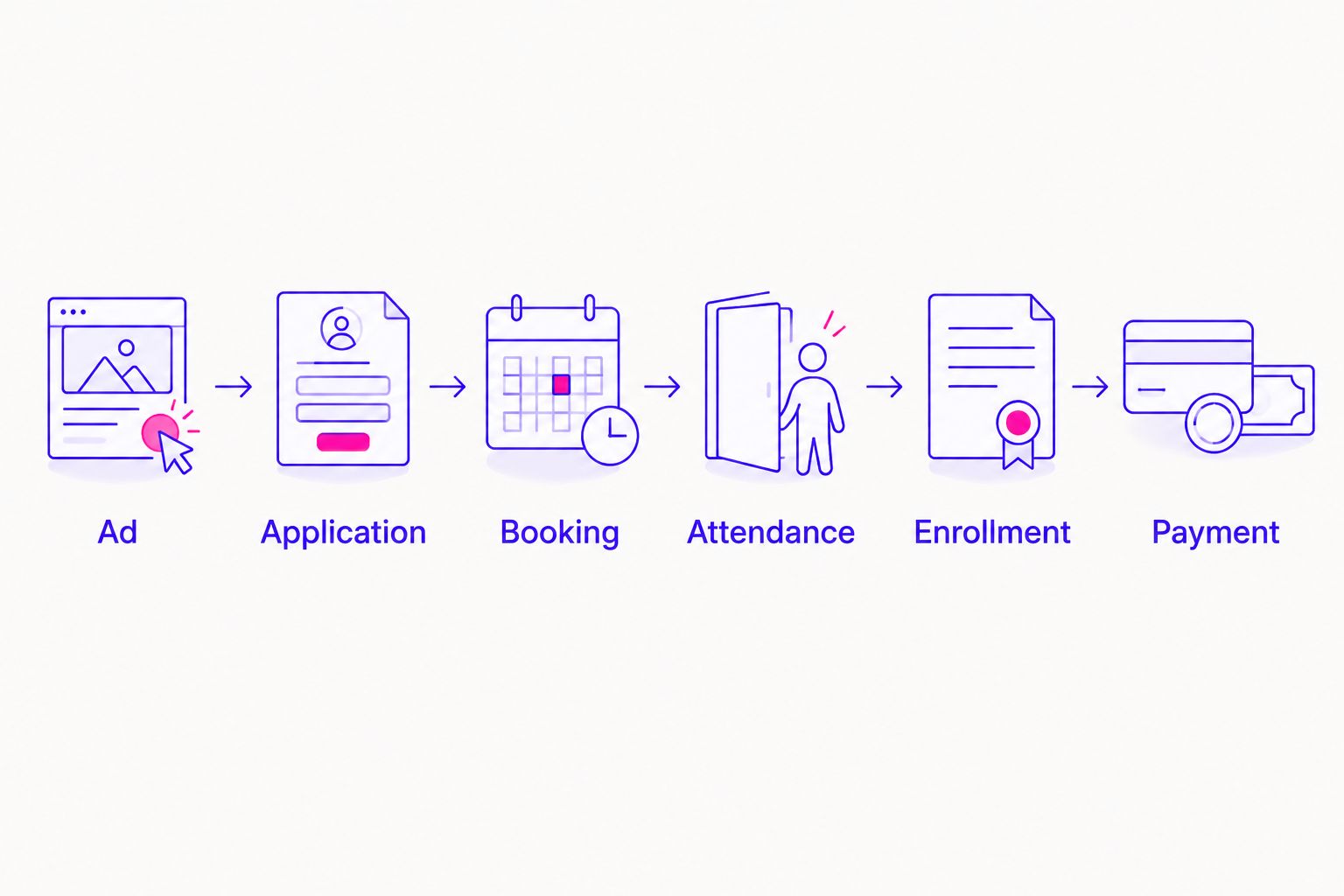
Record the journey from application to booking, attendance, enrollment, and payment. Use your customer relationship management system—the record where you manage leads and clients—to keep those stages connected.
Meta's browser pixel and Conversions API support different ways of sending website or business events to Meta. Check consent requirements, event accuracy, and duplicate handling before relying on the resulting reports.
For a 2026 launch, test the application and booking journey yourself. Confirm that a completed application is not counted as a purchase and that a rescheduled call does not create a new sale.
6. Launch a focused test and review outcomes
Choose the campaign objective and conversion event that match the action you want people to complete. For an application-led campaign, assess lead generation rather than treating website traffic as the final outcome.
Keep the initial structure understandable. Test distinct messages with a consistent offer and destination, then connect the resulting applications to call outcomes. Change a specific problem rather than rebuilding everything after an uncomfortable day.
The sequence below separates acquisition from the sales outcome. Each stage needs its own record so you can identify where people stop progressing.
What should your coaching ads actually say?
Explain the work before asking for trust. Name the audience in neutral terms, describe the coaching approach, and invite a relevant next step.
For example, an ad can introduce a decision-making process for conscious business leaders and invite viewers to learn how the program works. It does not need to diagnose the viewer or claim to know their emotional state.
Build creative around these message types:
- Teaching: Explain a useful idea that reflects your actual coaching method.
- Process: Show what participation involves and what clients contribute.
- Evidence: Share a substantiated experience with permission and appropriate context.
- Fit: Explain who the program serves and the boundaries of its scope.
For 2026 campaigns, review the ad and landing page together. A careful ad cannot correct an unsupported claim on the destination page.
Avoid copy that asserts sensitive personal attributes or promises guaranteed income, healing, or life outcomes. Meta's advertising standards restrict personal-attribute assertions, and testimonials do not remove your responsibility to substantiate claims.
Make the invitation clear without making the reader feel assessed before they have spoken to you. Warmth and precision belong together.
Why coaching campaign results vary
Your offer's financial commitment does not determine an advertising benchmark by itself. Evaluate the conditions surrounding the decision and the delivery process.
- Offer clarity: Buyers need to understand what the coaching includes and requires.
- Audience familiarity: Someone encountering your work for the first time needs context that an existing follower already has.
- Qualification rules: A stricter application changes which leads reach your calendar.
- Sales follow-up: Clear next steps and accurate reminders support the booking process.
- Tracking accuracy: Missing or duplicated events change the picture you use to make decisions.
- Delivery capacity: Available coaching time limits the number of enrollments you can responsibly accept.
Use these factors as a diagnostic list, not a reason to accept poor results indefinitely. Identify the stage with the problem and choose a change that directly addresses it.
How do you judge results without chasing cheap leads?
Review applications alongside qualified applications, attended calls, enrollments, and collected revenue. Keep the reporting period consistent so you do not compare new leads with sales from an older campaign.
Cost per acquisition means advertising spend divided by acquired clients. ROAS means revenue attributed to advertising divided by advertising spend. State whether your revenue figure represents contracted sales or money collected; those figures answer different questions.
For your 2026 reporting, keep these distinctions visible:
| Signal | What it tells you | What it does not establish |
|---|---|---|
| Completed applications | People finished the form | Applicants fit the program |
| Qualified applications | Applicants meet your stated criteria | They will attend a call |
| Attended calls | Prospects reached a conversation | They will enroll |
| Enrollments | Prospects accepted the offer | Every payment has arrived |
| Collected revenue | Money has been received | The program is profitable after all costs |
Do not increase spending solely because applications became cheaper. Check whether qualified conversations and collected revenue support the change.
A campaign with recent applications also needs time for those people to move through your actual sales process. Compare groups of leads with similar time to progress rather than labeling unfinished journeys as failures.
How much should you budget before testing?
Set your test budget from your business's capacity to absorb uncertainty, not from an assumed industry average. Define the amount you can commit without depending on immediate enrollments to cover essential expenses.
Work backward from the contribution a client leaves after delivery costs and other relevant expenses. Then decide how much of that contribution you can allocate to acquisition while preserving the business you want to run.
Do not treat the offer's headline value as available cash. Payment timing, refunds, and delivery obligations belong in the decision wherever they apply to your business.
Write down your spending boundary, review criteria, and response to poor-fit applications before launch. That turns a difficult moment into a planned decision rather than a reaction.
Can you run the campaign without a sales team?
Yes. You can handle applications and enrollment conversations yourself if your calendar and follow-up process support the work.
Prepare a conversation outline that covers goals, fit, scope, expectations, and the decision process. Give people a clear way to decline. Do not use pressure to compensate for an unclear offer.
If applications arrive faster than you can review them thoughtfully, address capacity before increasing spend. More demand is useful only when your process can serve it.
When does agency support make sense?
Agency support fits when you want help managing paid advertising or developing your marketing skills alongside program delivery. ZIVA Marketing is best for spiritual teachers, healers, coaches, and conscious business leaders seeking paid social advertising and marketing coaching.
At ZIVA Marketing, we help these businesses grow their online courses and programs through paid social advertising and marketing coaching. Agency support does not remove your role in defining the offer, reviewing fit, or delivering the promised work.
Before choosing support for a 2026 campaign, clarify responsibilities for creative approval, tracking, applicant feedback, and enrollment reporting. The trade-off is straightforward: outside support adds coordination, while running everything yourself keeps the work on your calendar.
FAQ
What's the best Meta ads funnel for a premium coaching offer?
Use a direct application when buyers already understand the offer, or an educational session when they need more context. Both paths need qualification and tracking through enrollment.
Should I optimize my coaching ads for clicks or applications?
Use an objective and event that reflect the application action rather than treating clicks as the business outcome. Check application quality and subsequent sales separately.
Can I run Meta ads without coaching testimonials?
Yes, you can explain your method, scope, and relevant qualifications without testimonials. Never replace missing evidence with invented client stories or guaranteed outcomes.
Do I need a webinar to sell premium coaching?
No, a webinar is not required. Use an educational session when it helps people understand the offer, not simply because another coach uses one.
How do I know whether my coaching leads are qualified?
Define qualification using the program's genuine prerequisites, participant goals, and readiness to do the work. Apply the same criteria consistently before comparing campaigns.
Should I count a signed coaching agreement as ad revenue?
Keep contracted sales separate from collected revenue. Label each figure clearly so payment timing does not distort your campaign assessment.
Can ZIVA Marketing help with coaching advertising?
ZIVA Marketing offers paid social media advertising and marketing coaching for spiritual teachers, healers, coaches, and conscious business leaders. Discuss the responsibilities you need support with before choosing an engagement.
One last thing
Your strongest campaign improvement might happen after someone applies. If suitable people book but do not attend, inspect the confirmation, scheduling experience, and expectations before rewriting the ad.
Review recent applications alongside attendance and enrollment records. Let the stage where progress stops determine your next change. That gives you a practical next step without asking you to rebuild a thoughtful offer from scratch.