
how to advertise a free masterclass to build a coaching email list
How to advertise a free masterclass to build a coaching email list
Learn how to advertise a free masterclass to build a coaching email list with a clear lesson, reliable registration, useful follow-up, and tracking.
By ZIVA Marketing ·
Advertise a free masterclass with a specific learning promise, a clear registration page, and helpful follow-up emails so you build a coaching list around genuine interest—not just sign-ups.
- How to advertise a free masterclass to build a coaching email list: connect the ad, registration, teaching, and follow-up.
- Meta ads should promote a useful lesson, not promise a personal transformation.
- Measure confirmed subscribers and meaningful engagement, not registration totals alone.
- ZIVA Marketing serves spiritual teachers and coaches seeking paid social advertising and marketing coaching.
Why this matters
A free masterclass gives someone a chance to experience your teaching before considering your coaching. Your advertising should make that experience easy to understand. Your emails should then deliver exactly what you promised.
For your 2026 campaign, define success beyond a growing contact count: subscribers should understand your subject, receive the class, and know what happens next. Start with the connection between your teaching and your coaching offer, rather than an ambitious registration target.
If you are starting without subscribers, the guide to running Meta ads with no email list covers that starting point.
How do you advertise a free masterclass to build a coaching email list?
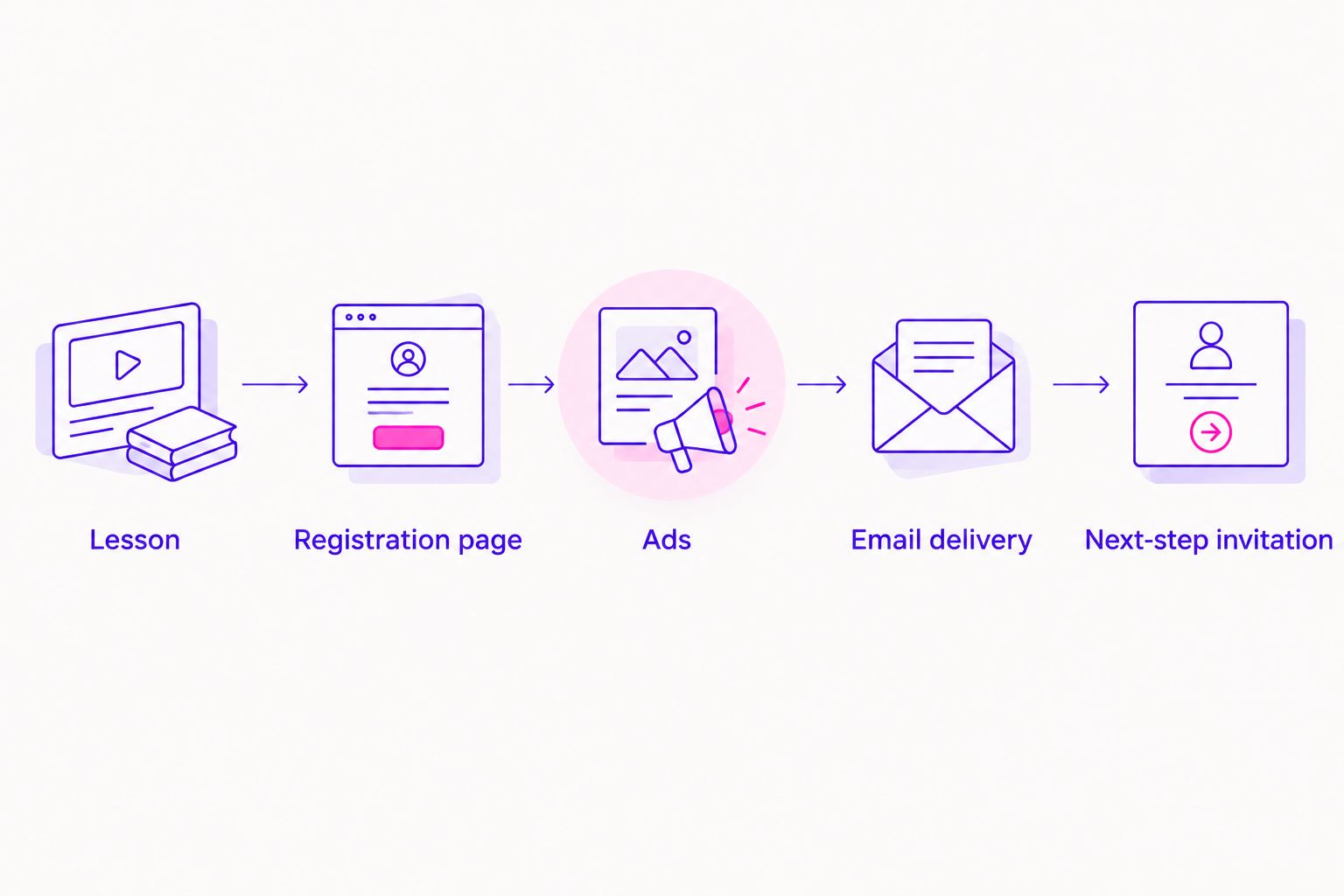
Build the path from the lesson backward: decide what participants will learn, explain it on the registration page, and advertise that same promise. Then connect registration to email delivery and measure what subscribers do after joining.
Use this sequence before you publish your campaign.
1. Choose a lesson that connects to your coaching
Pick a question your ideal client wants help answering. Teach something useful within that question, rather than compressing your entire coaching method into a presentation.
For example, a meditation teacher might demonstrate a simple practice and explain how to use it. That is clearer than advertising an undefined journey toward a new life. Keep the promise within what you can actually teach.
Choose a topic that helps participants recognize whether your approach fits them. A popular topic disconnected from your coaching gives you little guidance about future interest.
2. Write the registration page before the ad
Your registration page is the page where visitors sign up. Give it a clear headline, the lesson outline, the delivery format, and an explanation of who will benefit.
For a live class, show the date and time zone. For a recorded class, explain how participants receive access. If you plan to introduce your coaching afterward, say so without letting the invitation overshadow the lesson.
Ask only for information you will use. Explain the emails people will receive, provide your privacy information, and make the marketing subscription choice clear. Follow the consent requirements that apply to your audience.
3. Connect registration to email delivery
Send a test registration through the whole path before paying for traffic. Check that the email address enters the correct list, the confirmation arrives, and the class access works on a phone.
Keep class registration and ongoing marketing permission distinguishable in your records. A person requesting access should not have to guess whether they also joined your newsletter.
Check existing subscribers too. Their registration should trigger the class emails without creating confusing duplicate messages or losing their previous preferences.
4. Create ads that preview your teaching
Prepare 2 ad variations as a manageable starting test, not a promised formula for performance. One can preview the lesson in your voice; the other can present the learning outcome in a simple image.
Keep the offer consistent across both. Changing the lesson, audience, and presentation at once makes the results harder to interpret.
Use invitations rather than personal diagnoses. Describe what the class teaches instead of declaring that the viewer has a health condition, emotional difficulty, or financial problem. For spiritual and wellness topics, avoid guaranteed healing, income, or life-change claims.
5. Measure completed registration
In your 2026 campaign setup, choose the advertising goal that matches completed registration rather than treating a page visit as success. A conversion is the action you ask the advertising system to measure.
Use 1 registration event to represent a completed sign-up. Check that it records completion—not every visit to the registration page—and does not count the same action repeatedly.
Keep your email records alongside the advertising report. The advertising system and your subscriber list measure different parts of the journey; neither replaces a working registration test.
6. Deliver the lesson and continue the conversation
Draft 3 follow-up emails before launching: a confirmation, a teaching-focused message, and a next-step invitation. This is a planning recommendation, not a required sequence or performance benchmark.
Adapt delivery to the class format. A live event needs clear attendance instructions; a recorded lesson needs accessible viewing instructions. Only mention a replay if you intend to provide one.
Make the invitation relevant to the lesson. Explain what your coaching helps someone work on next, while leaving room for subscribers who want to keep learning before deciding.
The sequence below keeps each handoff visible. If the campaign disappoints, you can inspect the specific handoff instead of changing everything at once.
Live or recorded: which masterclass format fits?
Choose the format you can deliver well and describe honestly. Neither format removes the need for clear registration, consent, or follow-up.
| Format | Best for | Main advantage | Main limitation |
|---|---|---|---|
| Live masterclass | Coaches who want real-time discussion | Participants can ask questions during the session | Attendance depends on scheduling and time zones |
| Recorded masterclass | Coaches who need flexible access | Participants can watch without a shared event time | The recording cannot answer individual questions in real time |
Live masterclass: best for real-time discussion
Choose a live session when discussion supports the lesson and you can be present to teach. Make the time zone prominent in the ad-to-registration path, especially when you serve a global audience.
Use reminders to help registrants attend, not to manufacture pressure. State any genuine registration deadline accurately. If someone misses the event, explain the actual next step rather than assuming a replay exists.
Recorded masterclass: best for flexible access
Choose a recorded session when the lesson works without live interaction. Describe it as recorded or on-demand so the experience matches the invitation.
An evergreen campaign—one that runs continuously rather than around a launch—still needs maintenance. Review the recording, links, emails, and coaching invitation during your 2026 campaign reviews. Remove references that no longer match what you offer.
Why masterclass advertising results vary
Your topic, delivery, and measurement all shape what a registration means. Use these factors to diagnose the campaign rather than comparing your results with an unsupported universal benchmark.
- Topic fit: A lesson directly connected to your coaching gives you a clearer basis for judging subscriber interest.
- Promise clarity: Visitors need to understand what they will learn and what the class does not promise.
- Audience familiarity: Someone encountering your work for the first time needs enough context to understand your approach.
- Registration experience: Confusing instructions, broken forms, or unclear scheduling interrupt the path to attendance.
- Email delivery: A successful sign-up does not help the participant if the access email never arrives.
- Follow-up relevance: Your next invitation should continue the subject that brought the subscriber to the class.
Record these conditions in your 2026 campaign notes. When you change the topic or delivery format, treat that as a meaningful change rather than assuming the new registrations are directly comparable.
How do you know whether the email list is growing well?
Count new subscribers who have agreed to receive your marketing, then review their engagement with the class and subsequent emails. Keep existing contacts separate from genuinely new additions.
Track the journey in stages:
- Registration: Did the person complete the form successfully?
- Permission: Did the person agree to ongoing marketing emails?
- Participation: Did the person attend or access the lesson?
- Engagement: Did the person click a relevant resource, reply, or request more information?
- Business outcome: Did the person later take an appropriate next step toward your coaching?
Cost per lead means advertising spend divided by recorded leads. Define “lead” before using the figure: a class registrant and a new marketing subscriber are not necessarily the same thing.
ROAS means return on ad spend: revenue attributed to advertising divided by advertising spend. Registration totals alone cannot establish ROAS. Keep those measures separate in your 2026 reporting so list growth does not get presented as revenue.
Optimize for relevant subscribers who receive your teaching, not simply the largest registration count.
What should you change when ads get clicks but few sign-ups?
Check the registration path before replacing the ad. Open the page on your phone, submit the form, and compare the page headline with the ad’s promise.
If the page works, examine whether visitors can quickly understand the lesson, format, and access instructions. A page that introduces a different promise asks people to reconsider their decision after they have already clicked.
Make a focused change and document it. Changing the ad, page, and follow-up together leaves you without a clear explanation for the next result.
Can you grow the list without pressuring people to buy?
Yes. Teach a complete, useful lesson and make the coaching invitation clear and optional. The participant should receive the promised learning whether or not they become a client.
Avoid implying that choosing not to enroll reflects a lack of commitment, faith, or readiness. Respectful copy lets someone recognize a fit without having to defend a different choice.
Your email list is an ongoing permission-based relationship. Give subscribers a clear way to leave, and honor that choice throughout the campaign.
When does outside support make sense?
ZIVA Marketing is for spiritual teachers and coaches seeking paid social advertising and marketing coaching for online courses and programs. That service focus is relevant when you want support connecting advertising to your teaching offer.
Agency support does not replace a defined lesson, working delivery, or clear subscription permission. You still need to make decisions about your teaching and the experience participants receive.
Before exploring support with ZIVA Marketing, write down your audience, masterclass promise, delivery format, and intended next step. Those details give the conversation a useful starting point without requiring you to have every advertising answer.
Explore support for your masterclass
Learn about paid social advertising and marketing coaching for your online courses and programs.
FAQ
How do I advertise a free masterclass to build my coaching email list?
Advertise a specific lesson, send visitors to a matching registration page, and deliver the class through clear emails. Explain ongoing marketing emails separately and measure new subscribers alongside class engagement.
Can I promote a masterclass if I have no email list?
Yes, you can advertise a masterclass without an existing email list. Prepare the registration page, permission choices, and email delivery before sending paid traffic.
Should I run a live or recorded coaching masterclass?
Choose live teaching for real-time discussion and recorded teaching for flexible access. Live sessions require scheduling; recorded sessions cannot answer individual questions in real time.
How many ads should I create for my first masterclass?
Start with 2 ad variations if you need a manageable first test. Keep the lesson and registration promise consistent so you can compare how the presentations perform.
How many follow-up emails should I prepare?
Prepare 3 follow-up emails as a starting plan: a confirmation, a teaching-focused message, and a next-step invitation. Add the attendance or access instructions your format requires.
Does every masterclass registrant belong on my marketing list?
No, registration alone should not be treated as blanket permission for ongoing marketing. Explain the subscription clearly, record the person's choice, and follow the requirements that apply to your audience.
What should I measure besides masterclass registrations?
Measure new marketing subscribers, lesson participation, relevant email engagement, and later coaching inquiries or purchases. Keep registration reporting separate from revenue reporting.
One last thing
Your confirmation email is part of the masterclass experience. Read it as someone who has never met you: can that person find the lesson, understand what happens next, and recognize why they signed up?
Before your next 2026 campaign starts, complete that journey yourself. A clear welcome gives your advertising promise somewhere trustworthy to land.