
how long does it take to grow a coaching email list with paid ads
How long does it take to grow a coaching email list with paid ads?
How long does it take to grow a coaching email list with paid ads? Use net subscriber growth to forecast your timeline and separate signups from sales readiness.
By ZIVA Marketing ·
Growing a coaching email list with paid ads takes as long as your remaining subscriber goal divided by your measured net daily growth; a first signup is not proof of a repeatable pace.
- How long does it take to grow a coaching email list with paid ads? Divide your remaining goal by net daily growth.
- Measure subscribed contacts in your email platform, not just leads reported by the ad platform.
- Separate list growth from sales readiness: a new subscriber is not yet a coaching client.
- Ziva provides paid social advertising and marketing coaching for spiritual teachers, healers, coaches, and conscious business leaders.
Why this matters
You want a launch date you can trust, not another moving target. A list-building forecast helps you connect your advertising, email follow-up, and enrollment plans without treating every new contact as a future buyer.
Build your timeline around actual subscribers, not an advertised promise about speed. Your campaign has to attract people, collect permission, and deliver those contacts into your email system before it creates usable list growth.
Starting without an audience is a separate question from predicting growth. The guide to running Meta ads with no email list addresses that starting point.
How long does it take to grow a coaching email list with paid ads?
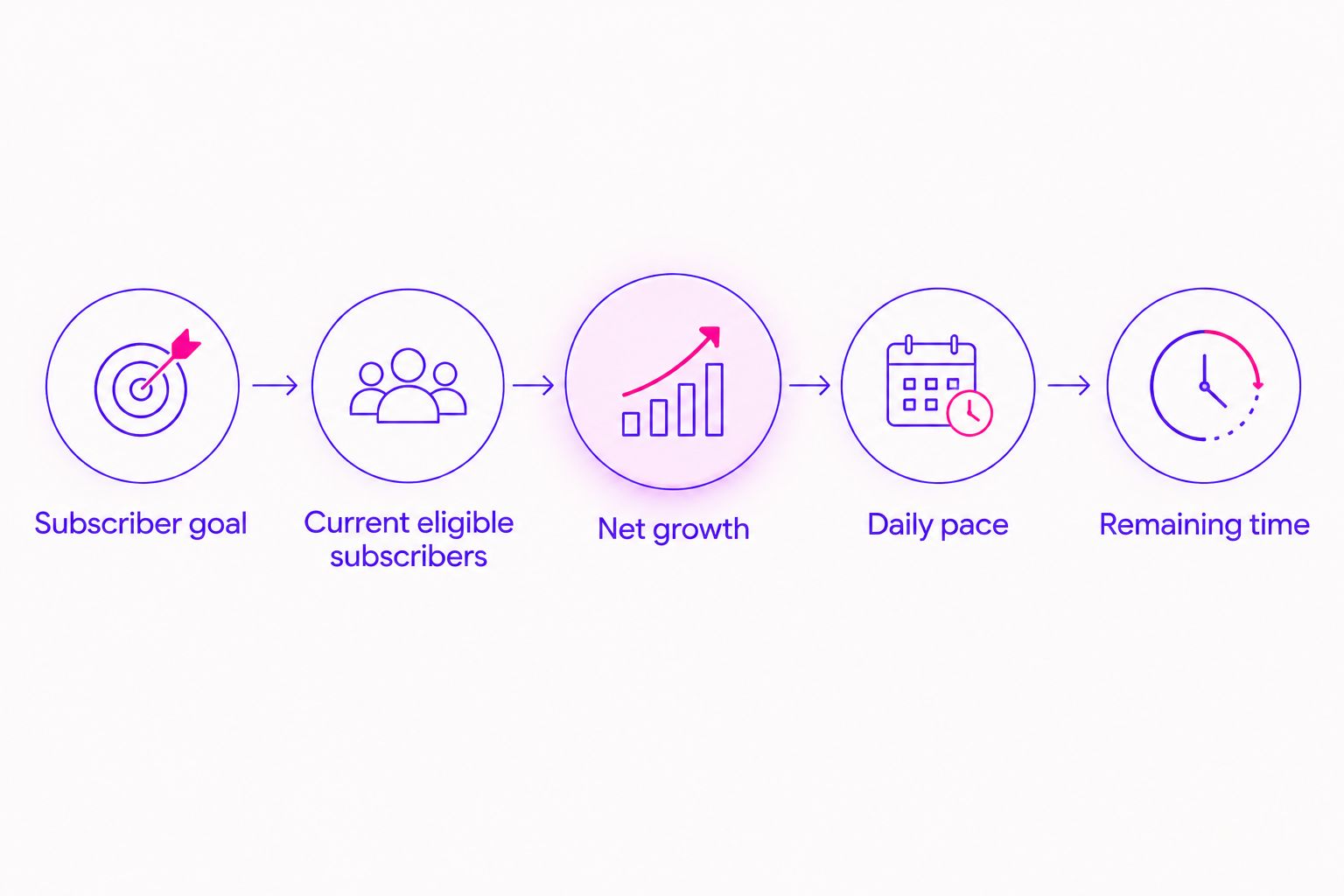
Calculate your timeline from the number of additional subscribers you need and the net number you add each day. Use these steps for your 2026 planning rather than borrowing another coach’s results.
- Set your subscriber goal. Define the total you want to reach and what makes a contact eligible to count.
- Subtract your current eligible subscribers. This gives you the remaining growth required, rather than treating your whole target as new acquisition.
- Measure net growth. Count new eligible subscribers, then subtract unsubscribes and contacts you remove during the same period.
- Find your daily pace. Divide net growth by the calendar days in that measurement period, including days when the campaign was paused.
- Calculate the remaining time. Divide the subscribers still needed by net subscribers added per day. Round up to a whole day.
Estimated remaining days = additional subscribers needed ÷ net subscribers added per day.
This is a planning estimate, not a delivery promise. It assumes your measured pace continues; a change in spending, audience, signup experience, or subscriber losses changes the forecast.
If net growth is zero or negative, the calculation does not produce a useful arrival date. Fix the reason the list is not growing before attaching a deadline to it.
Keep the measurement window consistent
Use the same start and end dates for subscriber additions, removals, and campaign activity. Mixing a short burst of signups with a longer period of unsubscribes makes the daily rate harder to interpret.
For a 2026 launch, keep a dated record of each forecast and the assumptions behind it. That record helps you distinguish a genuine change in growth from a change in how you counted.
Separate first signups from reliable growth
The first signup answers a narrow question: did someone complete the path from your ad to your email list? It does not establish how consistently that path will work.
A useful forecast needs repeated observations under a reasonably consistent setup. Look at subscriber additions alongside removals, campaign spending, and the offer you promoted. Keep those details together so a sudden change has context.
Do not turn your strongest day into your expected daily pace. Include quieter days and interruptions when you plan a calendar deadline.
Treat enrollment readiness as another milestone. A subscriber who requested a resource has expressed interest in that resource, not necessarily an intention to buy your coaching program.
Choose a signup offer that fits your coaching program
Your signup offer gives someone a reason to share their email address. Choose it for the relationship you want to build, not just for the number of form submissions it produces.
The options below serve different purposes. None comes with a reliable growth timeline until you measure it in your own campaign.
| Signup approach | Best for | Advantage | Limitation |
|---|---|---|---|
| Downloadable resource | Teaching a focused concept or exercise | Gives subscribers something they can use independently | A download does not show interest in a paid program |
| Webinar registration | Introducing a teaching approach through a presentation | Creates a clear opportunity to explain your work | Registration does not establish attendance or purchase intent |
| Program waitlist | Inviting interest in a specific upcoming program | Connects the signup directly to the program | Interest does not guarantee enrollment |
Downloadable resource: best for a focused introduction
Choose a resource that addresses a specific question your coaching helps people explore. Explain what subscribers receive and how it connects to your work.
Keep the promise proportionate. A brief exercise can offer a useful experience without promising a personal transformation. The limitation is intent: someone who wants the exercise has not necessarily asked to hear about a program.
Webinar registration: best for teaching your approach
Use a webinar when hearing you teach is relevant to the next decision. State the subject, format, and scheduling details clearly before someone registers.
Track registration separately from attendance and later action. This keeps your list-growth forecast honest while showing whether the presentation helps people understand the coaching offer.
Program waitlist: best for direct program interest
Use a waitlist when you can explain the program people are expressing interest in. Make the next communication clear so subscribers understand why they are joining.
A waitlist gives you a program-specific permission signal. Its limitation is equally important: joining a list is not a commitment to enroll, so do not count waitlist subscribers as confirmed clients.
Why your list-growth timeline varies
These factors belong in your forecast because they affect acquisition, counting, or retention. Review them before deciding that the campaign simply needs more time.
- Delivery and spending. Record whether the campaign actually ran and spent as intended. A planned budget is not evidence of delivered advertising.
- Audience relevance. Check whether the ad and signup offer address the people your coaching program serves.
- Offer clarity. State what subscribers receive and what happens after signup. A broad promise makes it harder to interpret their interest.
- Signup completion. Test the form, confirmation steps, and transfer into your email platform. A reported lead is not automatically an active subscriber.
- Subscriber retention. Include unsubscribes, duplicate removals, and invalid contacts when calculating net growth.
- Campaign changes. Mark changes to the ad, audience, form, or offer. Do not present a forecast from the previous setup as evidence for the new one.
Your 2026 planning sheet does not need to be elaborate. It needs consistent definitions and a clear record of what changed.
Check the whole signup path before buying more traffic
If growth disappoints you, start with the path a subscriber takes. Follow the ad destination, complete the form, and check the resulting email record.
Run 1 end-to-end signup test before you increase spending. Confirm that the contact arrives with the intended subscription status and receives the promised resource or registration information.
Then check whether an existing subscriber submitting again creates a duplicate or changes their status. Your forecast should count additional eligible subscribers, not repeated submissions from the same person.
Review the experience on a phone as well. Look for unreadable text, confusing instructions, missing confirmation messages, or a resource that does not arrive. Fix the specific failure you find rather than changing several unrelated parts of the campaign.
Read the gap between leads and subscribers
An ad platform and an email platform describe different events. A form submission, a transferred contact, and a confirmed subscriber are not interchangeable measures.
Choose the event that matches your goal and use it consistently. If your goal is an email audience you have permission to contact, count those subscribers in your email platform.
Keep the other events for diagnosis. They help you locate where people stop progressing, but they should not inflate your subscriber total.
Plan follow-up alongside acquisition
An email list is a permission-based relationship, not just a count. Your welcome message should explain what the subscriber requested, deliver it, and make the next step clear.
Keep the connection between the signup offer and your coaching visible. Someone who joined for a reflection exercise should understand why a later email discusses your program.
For your 2026 campaign, document the follow-up before sending traffic. Check that the message fits the ad’s promise and that replies reach an inbox you monitor.
You do not need a complicated sequence to explain yourself clearly. Start with the promised delivery, useful context, and an appropriate invitation; expand only where the subscriber needs more information.
When to continue, adjust, or pause
Continue when subscriber growth and audience fit support your goal. Watch what subscribers do after joining without confusing an encouraging signal with a guaranteed sale.
Adjust when a specific part of the path fails. If contacts submit the form but never reach the list, repair the transfer before rewriting the offer. If subscribers misunderstand what they joined, review the promise and welcome message together.
Pause expansion when you cannot reconcile the numbers. Spending more does not resolve a counting problem, and an unclear baseline makes the next forecast less useful.
Choose support that fits your needs
Ziva is a fit for spiritual teachers, healers, and coaches seeking paid social advertising and marketing coaching. The agency’s stated focus also includes conscious business leaders growing online courses and programs.
Ziva offers those services, not a self-service email platform. That distinction matters: agency support addresses advertising and marketing decisions, while your email system still handles subscriber records and delivery.
Bring your subscriber goal, current list count, campaign history, and enrollment timeline to a planning conversation. Those details give the discussion a concrete starting point without requiring you to predict results you have not measured.
Can I grow a coaching email list before I have clients?
You can invite people to subscribe before you have clients, but describe the signup offer truthfully. Explain what you teach without implying client results or testimonials you do not have.
List building and evidence of coaching outcomes are separate tasks. Keep both honest.
Should I wait until my list reaches its target before launching?
Use subscriber readiness and your program requirements alongside list size. Reaching a numerical target does not establish demand, while a smaller audience does not by itself establish that a launch is unworkable.
Your 2026 launch decision should include actual expressions of interest, your delivery readiness, and the next step subscribers have been invited to take.
Does faster list growth mean better ROAS?
Faster list growth does not establish better ROAS, or return on ad spend. ROAS compares attributed revenue with advertising spend, while subscriber growth counts audience additions.
Track both measures separately. A larger list is not evidence of profitable enrollment.
FAQ
How long does it take to grow a coaching email list with paid ads?
Estimate the time by dividing your remaining subscriber goal by measured net subscribers added per day. The estimate depends on that pace continuing; the first signup alone does not establish it.
Can I set a launch date before I run list-building ads?
You can set a launch date, but treat the subscriber forecast as an assumption until you measure growth. Keep the enrollment decision separate from the list-size target.
Should I count every lead my ad platform reports?
Count eligible subscribers in your email platform for an email-list growth goal. Use reported leads to diagnose the signup path, not as an automatic substitute for subscribed contacts.
What is the best signup offer for a coaching email list?
The best signup offer matches the next relationship you want with subscribers. A focused resource, teaching webinar, or program waitlist serves a different purpose, so compare audience fit as well as signup volume.
Why is my email list growing more slowly than my lead count?
Check duplicates, subscription status, contact transfers, and unsubscribes to explain the difference. Compare the same measurement period before drawing a conclusion.
Will a bigger coaching email list produce more sales?
A bigger coaching email list does not guarantee more sales. Measure interest in the paid offer and attributed revenue separately from subscriber additions.
Can Ziva help with paid ads for a coaching email list?
Ziva offers paid social advertising and marketing coaching for spiritual teachers, healers, coaches, and conscious business leaders. Its stated focus includes growing online courses and programs.
One last thing
Write down what counts as a subscriber before you choose a deadline. Otherwise, a change from form submissions to confirmed contacts can look like a sudden performance problem when you have actually changed the measurement.
A clear definition gives you a steadier starting point. Build the forecast from that definition, update it with observed growth, and let enrollment evidence guide the next decision.