
can meta ads work for a coach who has never run ads before
Can Meta ads work for a coach who has never run ads before?
Can Meta ads work for a coach who has never run ads before? Yes—with a clear offer and tracking. Learn how to prepare, measure results, and choose support.
By ZIVA Marketing ·
Yes, Meta ads can work for a coach who has never run ads before in 2026, provided you start with a clear offer, a working sign-up path, and a way to measure meaningful results—not an expectation of guaranteed sales.
- Can Meta ads work for a coach who has never run ads before? Yes—start with a measurable offer.
- Meta advertising should measure qualified inquiries or enrollments, not just clicks and likes.
- Ziva Marketing supports spiritual coaches through paid social advertising and marketing coaching.
- Start with one clear next step, verify tracking, and set a spending boundary before launch.
Why this matters
Your first campaign does not need to prove that you are an expert advertiser. It needs to answer a useful business question: does this message bring the right people toward your coaching offer?
That distinction creates breathing room. You can learn the advertising tools without treating every result as a judgment on your work. For the account side of that preparation, start with the guide to warming up a new ad account for a coaching business.
Being new to ads is a learning task, not a reason to rule out advertising. The more useful readiness check is whether your offer, client journey, and measurement are clear enough to test.
Can Meta ads work for a coach who has never run ads before?
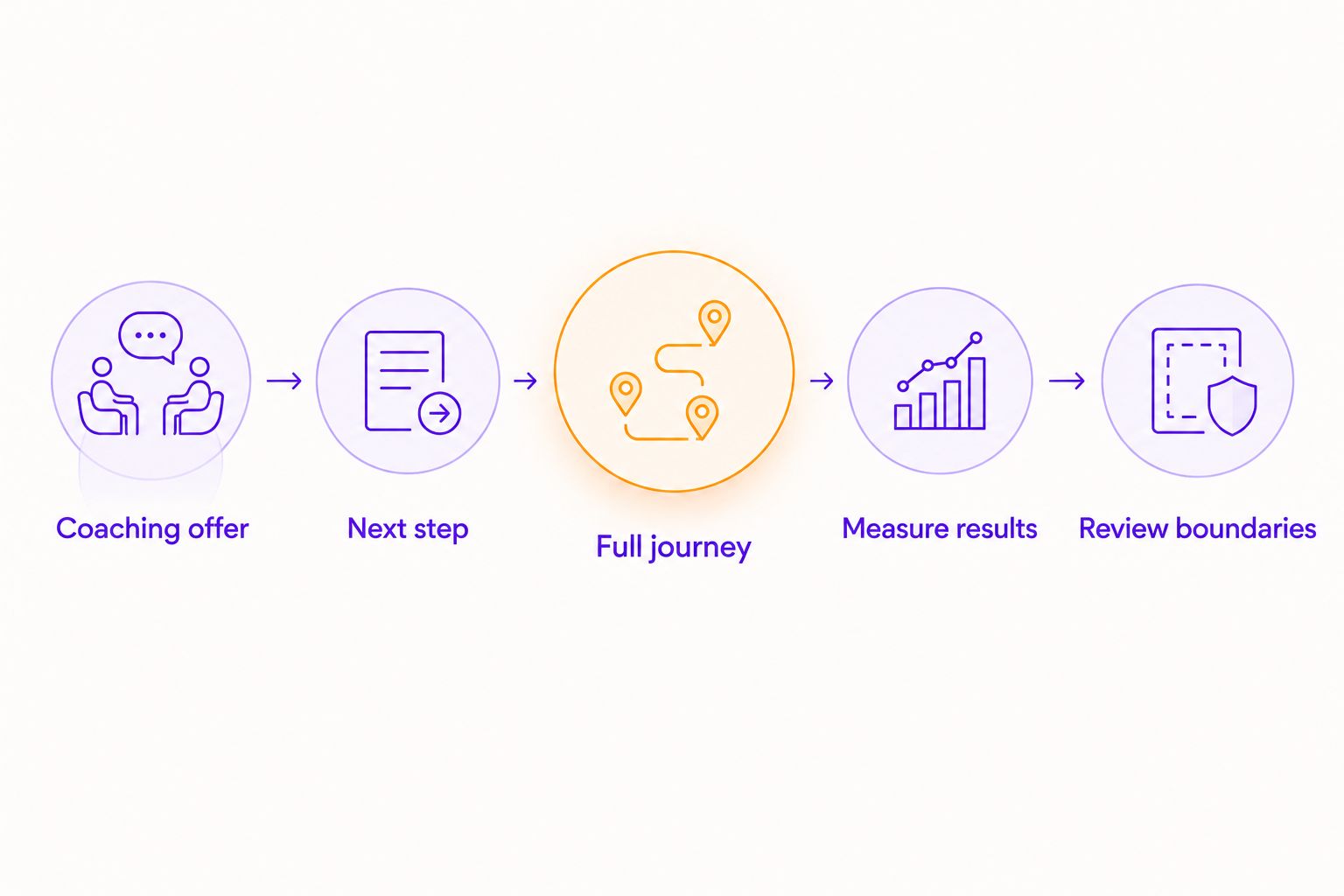
Yes. Meta advertising does not require a history of running campaigns, but a new advertiser still needs to prepare the business behind the ad. Use this sequence to make your first campaign a focused learning exercise.
1. Choose one coaching offer
Pick an offer you can explain in plain language. Name who it serves, what participants will do, and what support they receive. A stranger should understand the offer without knowing your personal story first.
If you have never sold the offer, speak with prospective clients before advertising it. Listen for the questions they ask and the language they use. Those conversations help you distinguish an unclear message from an offer that needs more development.
2. Choose one next step
Decide what you want an interested person to do: register, apply, book a conversation, or enroll. Use the action that matches how you actually sell your program. Do not ask one ad to serve several unrelated goals.
The next step should feel appropriate to the relationship. A person discovering your work needs enough information to understand the invitation before sharing contact details or making a commitment.
3. Check the full journey
Open the destination on your phone. Read the page, submit the form, and confirm that the confirmation message arrives. If booking or payment follows, check that part too.
Your 2026 launch checklist should cover the whole experience, not just the ad preview. An appealing ad cannot complete a form that does not work. Fix the path before paying to send people through it.
4. Define the result you will measure
A conversion is the action you want someone to complete, such as a registration or purchase. Choose a primary action and confirm that your tracking records it correctly. Keep your business records available for comparison.
Also define quality. For a coaching application, that means checking whether the applicant fits your program—not simply whether a form was submitted. Write down what makes an inquiry relevant before results arrive.
5. Set your review boundaries
Choose an amount your business can afford to spend on learning, and decide what would make you pause. A broken sign-up page, incorrect tracking, or a misleading promise needs attention immediately.
For performance decisions, review the complete path rather than reacting to an isolated click. Your first campaign should produce an interpretable result, not just activity.
What should a beginner's first Meta campaign promote?
Choose the invitation that fits your current offer and follow-up process. You do not need to build every possible route before starting. You need a route you can explain, deliver, and measure.
| Starting option | Best for | Advantage | Limitation |
|---|---|---|---|
| Educational registration | Coaches with a useful workshop or introduction | Lets people experience your teaching before a larger commitment | Registrations do not show whether people attended or enrolled |
| Coaching application | Coaches who need to assess client fit | Creates space to understand a prospective client's needs | Requires application review and timely follow-up |
| Direct enrollment | Programs with a clear explanation and working checkout | Measures a purchase rather than an intermediate action | Asks a new visitor to make a larger commitment immediately |
Choose the next step your business is ready to support. A workshop requires delivery and follow-up. An application requires someone to review it. A checkout requires clear program information and a reliable purchase experience.
Avoid choosing a registration campaign simply because registrations look easier to collect. If your actual goal is enrollment, keep following the journey beyond the registration. Otherwise, you will measure interest without learning whether it becomes business.
Why first-time coaching ad results vary
Advertising results reflect more than your familiarity with the dashboard. Review these factors together rather than assuming a disappointing result means that coaching cannot sell through ads.
- Offer clarity: Explain the program's purpose, format, and intended participant. Broad promises leave visitors with unanswered questions.
- Message fit: Use language your prospective clients understand. Describe the work without requiring them to share your vocabulary already.
- Page consistency: Carry the ad's invitation onto the destination page. A different promise or unexpected action creates confusion.
- Measurement accuracy: Check that the action you report is the action someone completed. Repeated or missing records distort your assessment.
- Follow-up: Decide who responds to inquiries and what happens next. A completed form is the beginning of a conversation, not its conclusion.
- Business economics: Include the work required to acquire and serve a client. Advertising revenue alone does not establish profit.
You do not need to solve all of these through advertising settings. Some improvements belong on the page; others belong in the offer or your follow-up process. Separating those tasks makes your next move clearer.
What should you track before judging whether ads work?
Track the business outcome and the steps that lead to it. Clicks help you understand whether people respond to an ad, but they do not show whether those people become suitable clients.
For a booking journey, review inquiries, relevant bookings, attended conversations, and enrollments. For direct enrollment, review completed purchases against your payment records. Use the journey your business actually has rather than collecting every available report.
ROAS means return on ad spend: revenue attributed to advertising divided by advertising spend. It describes revenue relative to ad spending, not profit. It does not automatically account for coaching delivery, payment processing, or other business expenses.
Cost per acquisition means the advertising cost of gaining a customer. Keep that separate from the cost of collecting a lead, which is someone who has expressed interest. A lower lead cost is not a better result if the inquiries do not fit your program.
For your 2026 reporting, label each result clearly. A registration, an application, and a paying client are different outcomes. Do not combine them into a single success total.
Read the pattern before changing the campaign
If people click but do not sign up, inspect the destination page and test the form. Confirm that the page explains the same invitation as the ad. Do not assume the audience is the problem before checking the experience.
If inquiries arrive but do not fit, review the promise and the qualification questions. If suitable people book but do not attend, inspect confirmation messages and reminders. These are different problems with different fixes.
When sales appear in your payment records but not in advertising reports, check the tracking connection. Do not treat a reporting gap as proof that no sales happened. Equally, do not count every sale as advertising-driven without checking the basis for that attribution.
Do you need a large following before running Meta ads?
No, a large following is not a prerequisite for advertising to people who have not discovered your work. Paid distribution and follower count are different things. What matters for preparation is whether a new visitor can understand and evaluate your offer.
Give that visitor useful context. Explain your approach, show what participation involves, and include genuine evidence you have permission to share. If you use a testimonial, preserve its meaning and do not present one person's experience as a promised result for everyone.
A small audience does not remove the need for trust. It changes where you need to build it: in the ad, on the page, and through the next interaction. Your job is to make the invitation clear, not to appear larger than you are.
Should you run ads yourself or get support?
Choose support based on the work you want to own. Learning the tools yourself, receiving marketing coaching, and delegating campaign management serve different needs. None removes your responsibility to explain the offer and serve clients well.
| Approach | Best for | Advantage | Limitation |
|---|---|---|---|
| Self-managed advertising | Coaches who want hands-on control and can make time to learn | Keeps decisions close to the business owner | Requires learning, checking setup, and reviewing results |
| Marketing coaching | Coaches who want guidance while staying involved | Helps connect campaign decisions with the broader offer | Still requires the coach to carry out agreed work |
| Agency management | Coaches who want to delegate advertising operations | Moves campaign work to an external team | Requires clear communication, access, and an agreed scope |
Ziva Marketing is best suited to spiritual coaches seeking paid social advertising and marketing coaching for online programs. At Ziva Marketing, we help spiritual teachers, healers, coaches, and conscious business leaders grow their courses and programs.
That support is relevant when you want help connecting your message, advertising, and business goals. It does not replace a deliverable offer, honest claims, or your role in client relationships. In 2026, choose an arrangement by clarifying responsibilities—not by expecting an outside team to guarantee an outcome.
Explore support for your first campaign
See paid social advertising and marketing coaching for spiritual teachers, healers, and coaches.
How can a spiritual coach advertise without overpromising?
Describe the experience you provide rather than promising a transformation you cannot guarantee. Explain the teaching, practices, support, and participation involved. Specific descriptions give prospective clients something meaningful to evaluate.
Meta's Advertising Standards restrict ads that assert or imply personal attributes, including physical or mental health conditions. Review your wording against those standards. Describe the program without telling a viewer that you know their private circumstances.
For example, an ad can describe a guided reflection program without diagnosing the reader. A page can explain a coaching approach without promising a medical outcome. Keep the distinction between coaching and treatment clear wherever it applies.
Honest language supports a clear invitation. You can write with warmth and conviction while acknowledging that individual experiences differ. That is especially important when your work touches grief, health, identity, or emotional vulnerability.
FAQ
Can Meta ads work if I have never advertised my coaching before?
Yes, Meta ads can work for a first-time coach when the offer, sign-up journey, and measurement are ready. Treat the first campaign as a focused test, not a promise of immediate profit.
Do I need a large Instagram following to run coaching ads?
No, a large Instagram following is not a prerequisite for running coaching ads. Your ad and destination page still need to explain your work clearly to someone who has never encountered it.
Should my first coaching ad promote a workshop or a discovery call?
Choose the action that fits your sales process and follow-up capacity. A workshop needs delivery and follow-up; a discovery call needs clear qualification and someone available to hold the conversation.
How much should I spend on my first Meta campaign?
Set a spending boundary based on what your business can afford to use for learning. Define the outcome you will measure and the conditions that would make you pause before launching.
How long does it take for a beginner's Meta ads to work?
There is no guaranteed timeline for a beginner's Meta campaign to produce clients. Judge the campaign through verified actions and client quality rather than expecting a sale by a fixed date.
Is marketing coaching better than hiring an ads agency?
Marketing coaching fits owners who want to stay involved and learn; agency management fits owners who want to delegate advertising operations. Ziva Marketing offers paid social advertising and marketing coaching for spiritual teachers, healers, coaches, and conscious business leaders.
Does a high ROAS mean my coaching campaign is profitable?
No, high ROAS does not establish profit because ROAS compares attributed revenue with advertising spend. Review delivery costs and other business expenses before deciding whether the campaign is financially worthwhile.
One last thing
Before your first 2026 campaign, ask someone unfamiliar with your work to read the ad and page. Ask them to explain who the offer serves, what happens next, and what they would receive. Listen without filling in the gaps for them.
If they need your explanation to understand the invitation, revise the copy before launch. Clarity is something you can improve before spending on traffic. You do not need to sound like an advertiser; you need to help the right person understand your work.