
best podcast hosting platforms for spiritual teachers
Best podcast hosting platforms for spiritual teachers in 2026
Buzzsprout wins for beginners, Captivate wins for monetizing. Compare 6 podcast hosting platforms for spiritual teachers building an audience in 2026.
By ZIVA Marketing ·
Six podcast hosting platforms make real sense for spiritual teachers building an audience in 2026, and the one you pick shapes how far your voice travels and how well it turns listeners into course buyers.
- Buzzsprout is the best podcast hosting platform for spiritual teachers starting their first show in 2026.
- Captivate wins for teachers ready to monetize with sponsorships and dynamic ad insertion.
- Spotify for Podcasters gives the widest built-in audience discovery for a global spiritual audience.
- Transistor is the pick for teachers running a public show plus a private, members-only feed.
- Libsyn remains one of the most reliable long-term hosts, running continuously since 2004.
Why this matters
A podcast is one of the few channels where a spiritual teacher's actual voice reaches a listener for 30, 45, sometimes 60 minutes at a time. That kind of trust is hard to build through a 15-second reel.
The hosting platform underneath your show decides three things: how your episodes get distributed, how much you learn about who's listening, and how easily you can turn that audience into paid students. We see this play out constantly when we launch a spiritual podcast with paid social ads for coaches and healers who want the show to feed a course funnel, not just sit as a hobby project.
Pick the wrong host in 2026 and you'll spend a year re-uploading episodes when you finally switch. Pick the right one and your podcast becomes a durable, compounding asset alongside your course hosting platform and your paid social funnel.
What makes the best podcast hosting platform for spiritual teachers
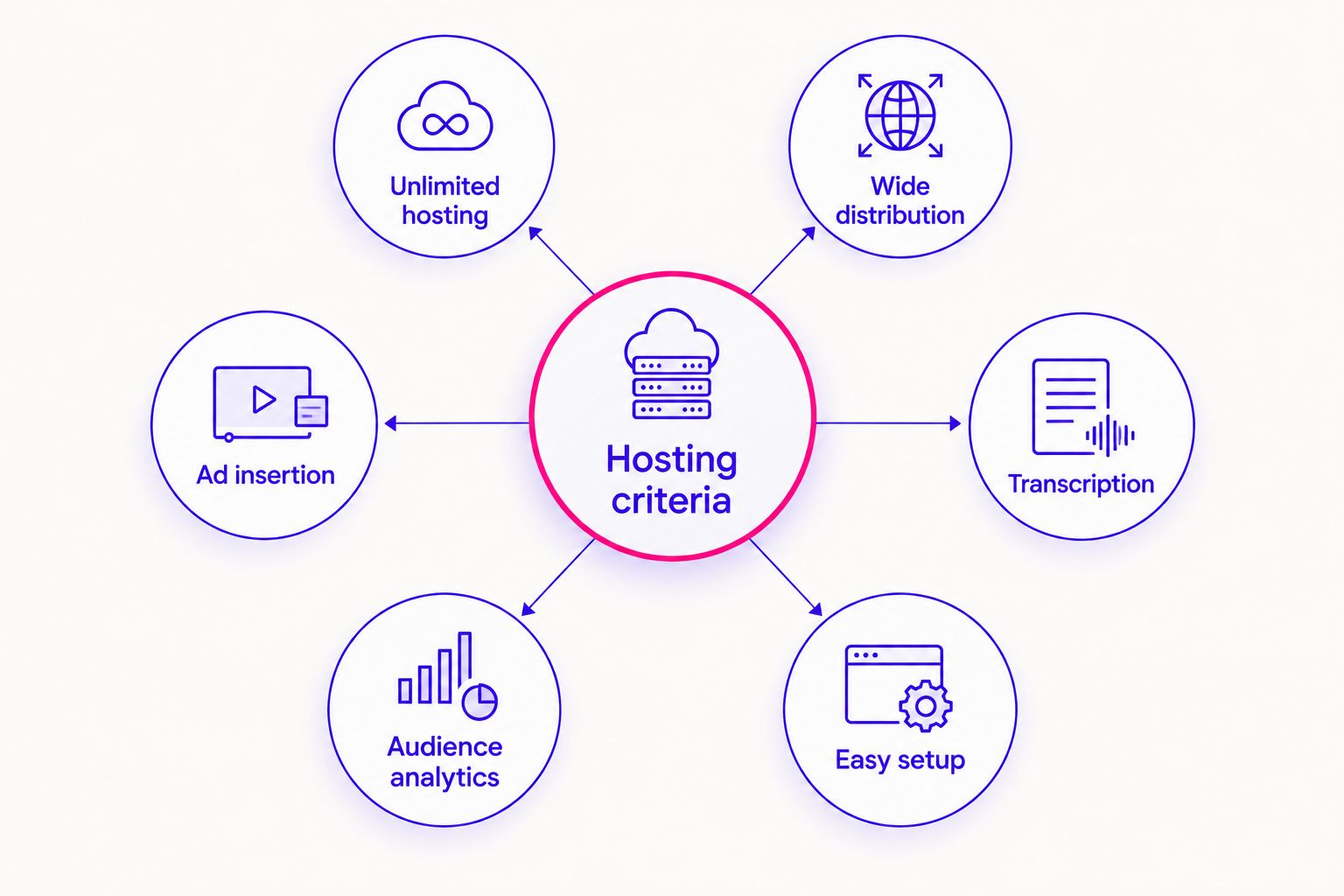
Every platform on this list was judged against the same criteria, in the order that matters most for a teacher building an audience across time zones:
- Unlimited episode hosting — no cap that forces you to delete old teachings to publish new ones
- Wide distribution — one upload reaching Apple Podcasts, Spotify, YouTube, and Amazon Music automatically
- Dynamic ad insertion — the ability to swap sponsorships or course promos into old episodes without re-uploading
- Transcription — text versions of every episode for accessibility and for search visibility
- Audience analytics by country — critical for teachers reaching listeners across continents
- Ease of setup — a dashboard a non-technical teacher can run without a producer
At a glance
| Platform | Best for | Standout feature | Key limitation |
|---|---|---|---|
| Buzzsprout | First-time podcasters | Automatic transcription and audio cleanup | Fewer advanced analytics for larger teams |
| Captivate | Monetizing an established show | Dynamic ad insertion and sponsor marketplace | More features than a solo beginner needs |
| Spotify for Podcasters | Built-in audience discovery | Native placement inside the Spotify app | Hosting tied closely to one ecosystem |
| Libsyn | Long-term reliability | Operating continuously since 2004 | Dashboard feels dated next to newer hosts |
| Transistor | Multiple or private shows | Unlimited shows and private feeds on one account | No free tier to test the platform |
| Podbean | Built-in fan monetization | Listener support and live streaming tools | Interface can feel cluttered with upsells |
1. Buzzsprout: best podcast hosting platform for a first-time teacher
Buzzsprout is built around a simple truth: most people recording their first episode have never touched a podcast dashboard before. The upload screen walks you through cover art, categories, and distribution to every major app in a few clicks, and it runs automatic transcription on every episode.
Buzzsprout pros:
- Dashboard designed for someone with zero technical background
- Automatic transcription included on every upload
- Audio enhancement tool cleans up recordings made on a laptop mic
Buzzsprout pricing: check the current plans on the Buzzsprout site directly.
Buzzsprout cons:
- Analytics are basic compared to platforms built for teams
- Fewer collaborator controls if an assistant helps run the show
Best for: a spiritual teacher recording their very first season. Verdict: Buy.
2. Captivate: best podcast hosting platform for monetizing an established show
Captivate is built for growth, not just publishing. It's the choice once a show has an audience and the teacher wants sponsorships or wants to promote a course launch into back-catalog episodes without touching the original files.
Captivate pros:
- Dynamic ad insertion swaps new promos into old episodes automatically
- Unlimited team seats, useful once a virtual assistant joins the show
- Analytics break listeners down by country, which matters for a global audience
Captivate cons:
- The dashboard has a steeper learning curve than beginner-focused hosts
- Overkill for a teacher who hasn't published a season yet
Best for: a teacher with 20+ episodes ready to monetize. Verdict: Buy.
3. Spotify for Podcasters: best for built-in audience discovery
Spotify for Podcasters (formerly Anchor) puts your show directly inside the app where a huge share of global listeners already browse. Recording, basic editing, and distribution live in one free-to-use dashboard, and Spotify's own recommendation engine can surface new episodes to listeners who've never heard of you.
Spotify for Podcasters pros:
- Native placement inside Spotify's discovery and recommendation system
- Simple built-in recording and editing tools for solo teachers
- Listener analytics by country, useful for a spiritual audience spread across continents
Spotify for Podcasters cons:
- Hosting is tied closely to Spotify's own ecosystem
- Fewer built-in monetization tools than dedicated hosting platforms
Best for: a teacher prioritizing discovery over control. Verdict: Buy.
4. Libsyn: best podcast hosting platform for long-term reliability
Libsyn has run continuously since 2004, which makes it one of the oldest surviving podcast hosts on the internet. Teachers who plan to still be publishing in ten years often pick Libsyn precisely because it's outlasted almost every competitor already.
Libsyn pros:
- Operating history longer than almost any other host in this list
- Stats dashboard covers download trends and app-level breakdowns
- Distribution to every major podcast app, no exceptions
Libsyn cons:
- Interface feels dated next to Buzzsprout or Captivate
- Fewer AI-assisted tools like automatic show notes
Best for: a teacher who values a track record over new features. Verdict: Hold — solid, but newer hosts move faster on features.
5. Transistor: best for a teacher running multiple or private shows
Transistor lets one account hold an unlimited number of separate shows, which matters the moment a teacher wants a public podcast plus a private, members-only feed for paying students. It pairs naturally with a video hosting platform when a course includes both audio teachings and video lessons.
Transistor pros:
- Multiple shows and private podcast feeds on a single account
- Clean, embeddable player for a website or sales page
- Straightforward analytics without a steep learning curve
Transistor cons:
- No free tier, so there's no way to test it without committing
- Smaller sponsorship marketplace than Captivate or Libsyn
Best for: a teacher building a private podcast feed for paid students. Verdict: Buy — for teachers already running a membership.
6. Podbean: best podcast hosting platform for built-in fan monetization
Podbean bakes monetization into the dashboard itself, with listener support tools and live streaming built in rather than bolted on. A teacher who wants fans to fund the show directly, alongside course sales, gets that option without a third-party plugin.
Podbean pros:
- Listener support and patron-style contributions built into the platform
- Live streaming lets a teacher host live Q&As tied to the show
- Mobile app allows recording and publishing from a phone
Podbean cons:
- Interface can feel cluttered with upsell prompts
- Some features sit behind higher tiers
Best for: a teacher who wants fan funding without extra tools. Verdict: Hold — good fit for a specific monetization style.
How we ranked these podcast hosting platforms
Each platform was measured against the six criteria above: unlimited hosting, wide distribution, dynamic ad insertion, transcription, country-level analytics, and ease of setup. Buzzsprout and Spotify for Podcasters score highest on ease of setup. Captivate and Podbean score highest on monetization tools. Transistor stands alone on private feeds, and Libsyn stands alone on operating history.
A podcast host is infrastructure, not a marketing strategy — the show still needs an audience-growth plan on top of it.
Turn your podcast into a course funnel
See how paid social ads grow a spiritual podcast's audience faster.
Which podcast hosting platform should you choose?
If you're recording season one right now, Buzzsprout is the best podcast hosting platform for spiritual teachers in 2026 because it removes every technical excuse for not publishing. If your show already has an audience and you're ready to fund the next course launch through sponsorships, move to Captivate. If you want your podcast to double as a private community for paying students, Transistor is the only platform on this list built for that from the ground up.
FAQ
What's the best podcast hosting platform for spiritual teachers in 2026?
Buzzsprout is the best overall pick for a first show because of its beginner-friendly dashboard and automatic transcription. Captivate takes over once the show is ready to monetize with sponsorships or course promos.
Is Spotify for Podcasters good enough for a spiritual teacher's show?
Yes, especially for discovery — Spotify's own app can surface episodes to new listeners without extra promotion. The tradeoff is fewer monetization tools than a dedicated host like Captivate or Podbean.
Do spiritual teachers need dynamic ad insertion?
Only once there's a back catalog worth monetizing. Dynamic ad insertion lets you swap a new course promo into old episodes automatically, which Captivate and Libsyn both support.
Can I switch podcast hosts later without losing subscribers?
Yes, if you keep your RSS feed redirect set up correctly during the move. Most hosts, including Buzzsprout, Libsyn, and Transistor, support a redirect so subscribers stay connected across the switch.
How does a podcast help sell online courses and programs?
A podcast builds trust over long listening sessions that short-form content can't match, which primes listeners to buy a course later. Pairing the show with paid social ads speeds up how fast that audience grows.
Is Libsyn still worth using in 2026?
Yes, for teachers who prioritize a long operating history over new features — Libsyn has run continuously since 2004. Its dashboard is less modern than Buzzsprout or Captivate, but distribution and reliability are solid.
What's the difference between Buzzsprout and Captivate?
Buzzsprout is built for ease of setup and is the better starting point for a first season. Captivate is built for growth, with dynamic ad insertion and unlimited team seats for a show that's already established.
Do I need a private podcast feed for a paid coaching community?
Only if you want audio content exclusive to paying members. Transistor is the platform on this list built specifically for running a public show and a private feed from one account.
One last thing
The biggest mistake spiritual teachers make in 2026 isn't picking the wrong host — it's picking a great host and then never telling anyone the show exists. A podcast on Buzzsprout or Captivate with zero promotion behind it grows the same way a candle grows in a closed room: not at all. The teachers seeing real download numbers are the ones pairing distribution with a real webinar platform launch or a paid social push, not the ones with the fanciest dashboard.