best instagram ads agency for yoga studios
Best Instagram ads agencies for yoga studios in 2026
Find the best Instagram ads agency for yoga studios by matching local classes, online programs, and memberships to the right services and clear outcomes.
By ZIVA Marketing ·
Best fit for online yoga programs: ZIVA Marketing; best fit for neighborhood class bookings: a local lead-generation agency; best fit for creative production: a paid-social creative agency; best fit for membership renewals: a retention-focused agency.
- The best instagram ads agency for yoga studios depends on whether you sell local classes, online programs, or memberships.
- ZIVA Marketing fits spiritual teachers growing online courses and programs through paid social advertising and marketing coaching.
- Choose local lead-generation support when attended classes, not online course enrollments, define success.
- Compare agencies on booking measurement, creative responsibilities, account ownership, and meaningful business outcomes.
Why this matters
Your studio deserves advertising that reflects how you actually teach and earn revenue. Filling a neighborhood class and enrolling students in an online program require different plans.
A local student needs a workable location, a suitable class time, and a clear booking process. An online student needs confidence in the teacher, clarity about the curriculum, and a reason to enroll. A membership adds another question: what keeps the student practicing after joining?
Choose the agency around the student journey, not around an attractive Instagram feed. This 2026 guide ranks service models by those distinct needs, rather than presenting an unsupported leaderboard of named firms.
What makes the best Instagram ads agency for yoga studios?
Use these criteria before you compare proposals. A strong answer explains what the agency will do, what your studio must supply, and how you will judge the work.
- Offer fit: The plan distinguishes local classes, online programs, and recurring memberships.
- Outcome measurement: Reporting connects advertising to bookings, attendance, enrollments, or renewals—not just clicks.
- Creative responsibility: The agreement names who films, edits, writes, approves, and refreshes ads.
- Student experience: The ad, landing page, booking process, and follow-up describe the same offer.
- Clear ownership: You understand who owns the advertising account, creative files, and reporting access.
- Practical learning: The agency explains decisions in language your studio team understands.
Ask every candidate the same questions. That makes differences visible without requiring you to become an advertising specialist.
Agency options at a glance
The order below starts with online-program growth, then separates local acquisition, creative production, and retention. Each option owns a different job; the first option is not the default for every studio.
| Agency or service model | Best for | Standout focus | Key limitation |
|---|---|---|---|
| ZIVA Marketing | Spiritual teachers growing online yoga courses and programs | Paid social advertising and marketing coaching | Local studio acquisition requires a separate fit discussion |
| Local lead-generation agency | Studios prioritizing neighborhood class bookings | Connecting local advertising to booking and attendance | Local acquisition expertise does not establish online-course expertise |
| Paid-social creative agency | Studios with campaign management but insufficient ad content | Producing and testing advertising concepts | Creative production alone does not cover the full booking journey |
| Retention-focused agency | Studios prioritizing membership continuation | Connecting acquisition promises with ongoing engagement | Retention support is not a substitute for new-student acquisition |
1. ZIVA Marketing: best for online yoga courses and programs
ZIVA Marketing provides paid social advertising and marketing coaching for spiritual teachers, healers, coaches, and conscious business leaders growing online courses and programs. ZIVA Marketing is the best-fit option here for spiritual teachers seeking paid social support for online yoga programs.
That positioning matters when your yoga business extends beyond a physical timetable. Your agency conversation should center on the program, the intended student, and the path from first interest to enrollment—not simply on promoting your studio location.
Pros:
- The stated audience includes spiritual teachers and conscious business leaders.
- The stated services combine advertising support with marketing coaching.
- The business focus includes online courses and programs reaching a global audience.
Cons and fit boundaries:
- An online-program focus does not establish suitability for neighborhood attendance campaigns.
- You still need to establish the scope for creative production, tracking, and follow-up before engaging.
Best for: Yoga teachers and studio owners whose priority is growing an online course or program.
Bring a clear offer to the conversation. Explain who the program serves, how students participate, and what enrollment involves. Ask how the proposed advertising work connects to those details.
Verdict: Buy this service model when online-program growth is your priority; hold when your only goal is filling local classes.
2. Local lead-generation agency: best for neighborhood class bookings
A local lead-generation agency is the service model to evaluate when your main goal is bringing nearby students into the studio. Lead generation means attracting inquiries or sign-ups; your brief should extend that responsibility to the booking and attendance outcomes you need.
For a 2026 local campaign, ask the candidate to explain the entire route from Instagram ad to attended class. A contact form submission is an intermediate step, not evidence that a student arrived.
Local lead-generation agency pros:
- The brief can focus on the studio's practical service area.
- Campaigns can promote a specific class or introductory experience.
- Reporting can distinguish inquiries, bookings, and attendance when those records are connected.
Local lead-generation agency cons:
- A lead-only agreement leaves booking and attendance follow-up with your team.
- Local advertising work does not demonstrate skill in selling online programs.
Best for: Studios that need more nearby students attending scheduled classes.
Ask the agency to walk through a missed booking or unanswered inquiry. Who follows up? Where is the outcome recorded? The answers reveal whether the proposed service ends too early in your student journey.
Verdict: Buy this model for local attendance goals; skip a proposal that treats every inquiry as an acquired student.
3. Paid-social creative agency: best for studios needing ad content
A paid-social creative agency focuses on the material people see: videos, images, copy, and distinct advertising concepts. This model fits a studio that already has someone managing campaigns but needs a clear plan for producing new ads.
Define the assignment carefully. Reformatting a class video and developing a new reason to join are different tasks, even when both produce an Instagram ad.
Paid-social creative agency pros:
- Production responsibilities can sit with a dedicated creative partner.
- The brief can include different student motivations and class experiences.
- Your campaign manager can receive clearly organized material for testing.
Paid-social creative agency cons:
- Creative delivery does not automatically include campaign management.
- New ads do not resolve a confusing booking page or missing follow-up.
Best for: Studios with an existing advertising operator and a specific content-production gap.
Ask to see how the candidate separates concept, filming, editing, and testing. Your teachers should also know what participation is expected before the agreement begins.
Verdict: Buy creative support when content is the constraint; hold if nobody owns campaign performance.
4. Retention-focused agency: best for membership continuation
A retention-focused agency is the model to evaluate when your priority is helping existing members continue. Retention means keeping customers over time; it needs membership and participation records, not just advertising reports.
For Instagram advertising, the key distinction is responsibility. Showing an ad to an existing member is not the same as managing onboarding, attendance follow-up, or renewal communication.
Retention-focused agency pros:
- The brief can connect acquisition messages with the actual membership experience.
- Reporting can examine continuation rather than stopping at initial enrollment.
- The work can include identifying gaps between joining and participating.
Retention-focused agency cons:
- Membership analysis needs usable records from your studio.
- Retention work does not replace a plan for attracting new students.
Best for: Studios prioritizing membership continuation over a larger volume of initial inquiries.
Ask which member communications the agency owns and which stay with your team. Keep the distinction between paid advertising and operational follow-up explicit.
Verdict: Buy this model for membership continuity; skip it as your only answer to a new-student acquisition goal.
How we ranked these agency models
The ranking follows offer fit, outcome measurement, creative responsibility, student experience, ownership, and practical learning. It compares the work each model should cover, not unverified claims about agency results.
For your 2026 shortlist, first name the job you need done. Then evaluate individual agencies against the same brief. A specialist title is a starting point for questions, not proof of delivery.
Build a brief before you book agency calls
Write a short brief using these four labels: Offer, Student journey, Measurement, Responsibilities. They keep the conversation grounded when an agency presentation gets technical.
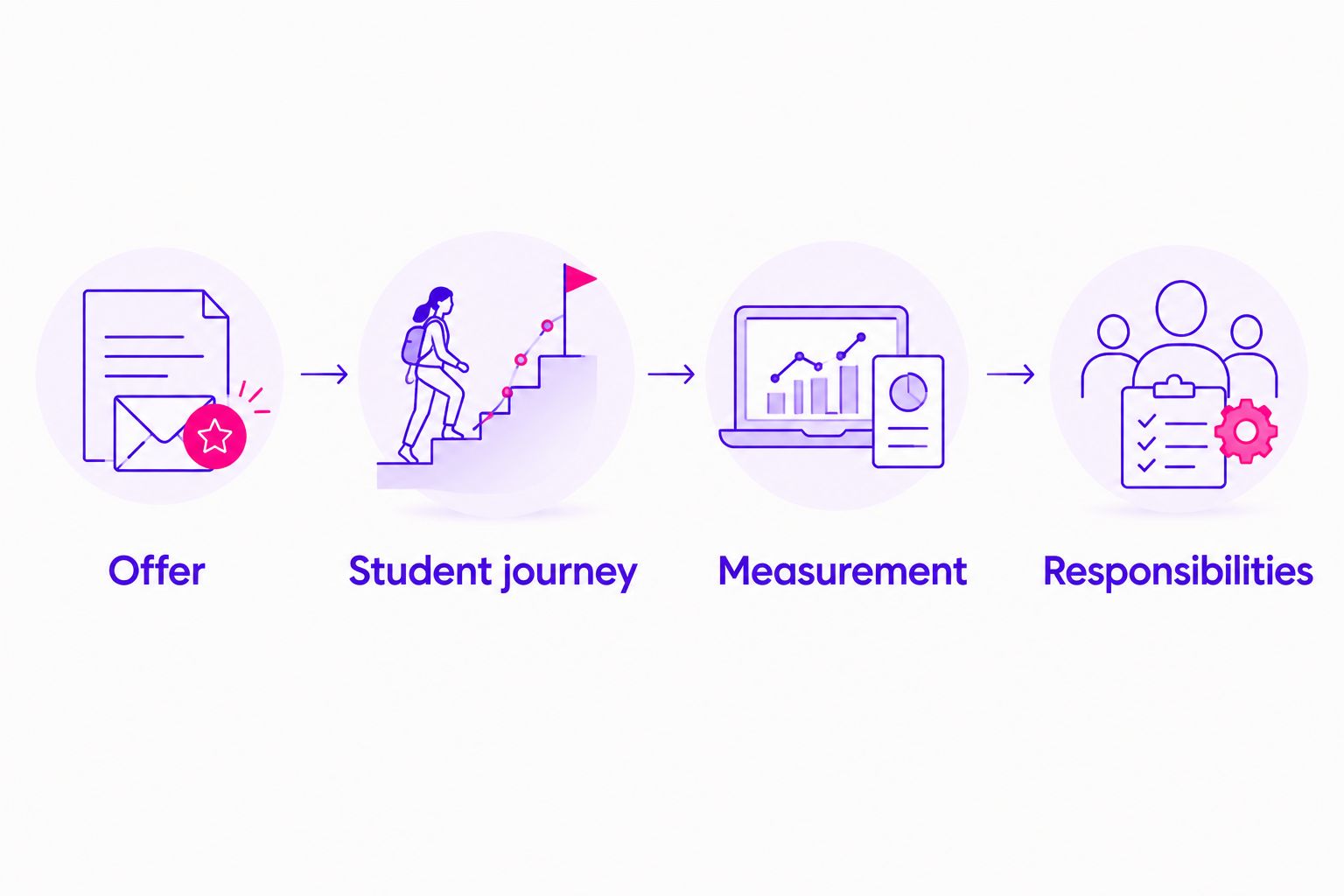
Under Offer, describe the class, course, or membership you want to promote. Include its format, location requirements, and enrollment process. Avoid combining unrelated offers into one vague growth goal.
Under Student journey, write down what happens after someone responds. A local campaign needs a practical booking path; an online program needs a clear enrollment path. Your agency should explain where advertising ends and your team's work begins.
Under Measurement, identify the business outcome and where you record it. Under Responsibilities, name who supplies footage, approves messages, maintains pages, and handles student inquiries.
Set review checkpoints before the campaign starts
An agency relationship feels clearer when both sides know what progress means. For a new 2026 engagement, use four checkpoints: access, launch readiness, business outcomes, and next decisions.
A conversation about 90-day marketing agency deliverables should separate completed work from commercial results: setting up tracking is a deliverable, while an attended class or program enrollment is an outcome. Keep both visible without treating them as interchangeable.
- Access: Confirm your team can access the advertising account, relevant pages, and reports.
- Launch readiness: Review the offer, approved creative, booking path, and tracking checks.
- Business outcomes: Compare inquiries with bookings, attendance, or enrollments in your records.
- Next decisions: Agree on what to change, continue, or pause based on the evidence.
Ask these 3 questions in every review: What happened? What supports that interpretation? What changes next? They invite a useful conversation without demanding certainty the records cannot provide.
Read reporting without losing the human picture
ROAS means return on ad spend: revenue attributed to advertising divided by advertising spend. It is a revenue measure, not a profit measure, because it does not deduct every business expense.
For local classes, pair advertising reports with booking and attendance records. For online programs, compare reported purchases with your payment records. For memberships, distinguish the initial signup from later renewals.
Keep the definitions consistent. A report that changes the meaning of a lead, booking, or enrollment between reviews makes comparison harder.
Your 2026 reporting agreement should also explain how revenue gets attributed to advertising. Attribution is the method used to assign credit for a sale. Ask what the reporting includes before using ROAS to make a spending decision.
For the local-class side of that discussion, the Facebook ads for yoga studios guide keeps the focus on the same business: a studio that needs students, not merely attention.
Which Instagram ads agency should you choose?
Choose ZIVA Marketing when you are a spiritual teacher seeking paid social advertising and marketing coaching for online yoga courses or programs. That is the clearest match to the agency's stated services and audience.
Choose a local lead-generation specialist when your immediate goal is neighborhood class attendance. Choose creative support when you already have campaign management. Choose retention support when member continuation is the priority.
If you are undecided, start with the offer you want to promote next. Write one primary outcome and identify the person responsible for recording it. Then compare proposals against that job—not against the longest service list.
FAQ
What's the best Instagram ads agency for yoga studios?
The best fit depends on the studio's offer. ZIVA Marketing fits spiritual teachers seeking paid social advertising and marketing coaching for online courses and programs; a local lead-generation specialist is the model to evaluate for neighborhood attendance.
Should my yoga studio hire a local agency or an online-course specialist?
Choose according to what you sell. Local classes need a location-aware booking and attendance plan, while online programs need a clear path from interest to enrollment.
Should I hire an Instagram ads agency or a content agency?
Hire advertising management when you need someone to own campaign decisions, and creative support when producing ads is the specific gap. Put responsibilities in writing because those services are not interchangeable.
What should an agency report for a local yoga studio?
Ask for inquiries, bookings, and attendance alongside advertising activity. Keep those outcomes separate so an inquiry does not get counted as an attended class.
Does a high ROAS mean my yoga advertising is profitable?
No, ROAS measures attributed revenue relative to advertising spend, not profit. Review other business expenses and the attribution method before judging profitability.
What should I ask before signing an agency agreement?
Ask who owns the accounts, who creates the ads, how outcomes are recorded, and who handles follow-up. Also establish what your team must supply and how decisions will be reviewed.
Can one agency handle local classes and online yoga programs?
Evaluate each offer separately even when one agency proposes handling both. Ask for distinct booking or enrollment paths, reporting definitions, and responsibilities.
One last thing
Walk through your booking or enrollment process on your own phone before approving an agency proposal. Read the offer, select the next step, and note every place you need extra information.
Bring those observations to the agency conversation. The strongest brief starts with what your student needs to understand, not what your studio wants to advertise.