best ad spy tools for youtube ads
Best ad spy tools for YouTube ads in 2026
Compare the best ad spy tools for YouTube ads. Start with Google Ads Transparency Center, explore creative examples, and turn research into original tests.
By ZIVA Marketing ·
Google Ads Transparency Center is the best starting point for YouTube ad research in 2026; use VidTao for creative discovery and YouTube itself to understand the viewing experience.
- Google Ads Transparency Center leads the best ad spy tools for YouTube ads for advertiser verification.
- VidTao suits YouTube creative discovery; its library is not evidence of competitor profitability.
- YouTube adds viewing context, but your feed is not a complete competitor ad library.
- Ziva recommends turning competitor research into original creative tests, not copied scripts.
Why this matters
Competitor research should make your next ad clearer, not make you feel behind. A polished video shows what another business published. It does not show whether the campaign sold courses or attracted qualified coaching clients.
At Ziva, we help spiritual teachers, healers, coaches, and conscious business leaders grow their courses and programs through paid social advertising and marketing coaching. For YouTube ad research, our recommendation is simple: separate the message you can observe from the business results you cannot.
An ad library gives you creative evidence, not a competitor’s ROAS. Return on ad spend, or ROAS, compares attributed revenue with advertising spend. You cannot calculate it from a video alone.
This 2026 guide ranks three research options by their job in your workflow. It does not rank them by supposed access to competitors’ private campaign results.
What makes the best YouTube ad research tool
Use these criteria before choosing a research option:
- YouTube relevance: Find video advertising, not just examples from unrelated platforms.
- Advertiser identity: Establish which business published the message before drawing conclusions.
- Creative visibility: Review the opening, explanation, proof, and invitation to act.
- Research context: Keep advertiser, location, and timing information separate from assumptions about targeting.
- Evidence boundaries: Distinguish observable creative from unknown spend, conversions, and profitability.
For a course creator, the most useful result is an idea you can test honestly. A large collection of unrelated ads is less useful than a small set that addresses your buyer’s actual questions.
YouTube ad research options at a glance
| Option | Best for | Standout feature | Key limitation |
|---|---|---|---|
| Google Ads Transparency Center | Checking a known advertiser | Google’s own searchable advertising transparency resource | Does not reveal a competitor’s course sales or ROAS |
| VidTao | Discovering YouTube ad creative | A third-party library focused on YouTube advertising research | Library examples do not establish targeting or profitability |
| YouTube | Understanding the viewer experience | Watching ads within the environment where viewers encounter them | Your viewing experience is personalized and incomplete |
These options serve different purposes. Start with advertiser research, expand into creative discovery when needed, and use direct viewing to assess how an interruption feels to a real person.
1. Google Ads Transparency Center: best for advertiser verification
Google Ads Transparency Center lets you search advertising associated with advertisers across Google’s advertising services, including YouTube. It is the strongest starting point when you know the business or website you want to investigate.
For your 2026 research, begin with a relevant course business rather than a broad topic alone. Check the advertiser identity and the video creative before adding an example to your notes. Similar business names are not enough to establish a match.
How to use Google Ads Transparency Center
Search for the advertiser or website. Use the available video, date, and region controls to narrow the results, then inspect the examples that match your research question.
Look for a specific communication choice. Does the teacher introduce a method before describing the program? Does the ad invite viewers to a class, an application, or another next step? Record what the ad actually says.
Google Ads Transparency Center pros:
- Provides a first-party source for checking advertising associated with an advertiser.
- Supports focused research when you already know the business.
- Helps distinguish published messaging from secondhand descriptions.
Google Ads Transparency Center cons:
- Does not provide the competitor’s purchase revenue or ROAS.
- Does not explain why the advertiser chose a particular message.
- Still requires you to interpret whether an example fits your audience.
Best for: Coaches and course creators checking the advertising of a known business.
Verdict: Use Google Ads Transparency Center first; hold off on additional tools until you identify a research gap.
2. VidTao: best for YouTube creative discovery
VidTao is a third-party YouTube ad research library. Its role in this shortlist is discovery: finding video advertising examples to study beyond the advertisers you already follow.
Choose a narrow research question before exploring. For example, study how educators explain an unfamiliar method or how a course ad introduces an invitation. That gives your browsing a useful boundary.
How to use VidTao without chasing lookalikes
Collect examples by communication problem, not by how much you admire the advertiser. A clear demonstration from another category can teach you more about explanation than a visually beautiful ad from your own niche.
Keep your notes separate from any tool-provided indicators. A public view count, where shown, is not a purchase count. A library listing does not establish how much an advertiser spent or what the campaign returned.
Before adopting VidTao for your 2026 workflow, check its current search functions against the exact research task you need to complete. This recommendation concerns its role as a YouTube creative library, not an unverified feature checklist.
VidTao pros:
- Provides a dedicated place to explore YouTube advertising creative.
- Supports research beyond a shortlist of familiar competitors.
- Gives you examples to classify by message, opening, and invitation.
VidTao cons:
- Does not establish that an observed ad generated profitable customers.
- Adds another research environment to manage.
- Requires judgment to separate useful structure from irrelevant niche details.
Best for: Creators who need a broader set of video messaging examples.
Verdict: Use VidTao for a defined discovery task; skip open-ended browsing without a creative question.
3. YouTube: best for understanding the viewer experience
YouTube itself is a research companion, not a complete ad spy database. Watching an ad in context helps you assess the interruption, the opening, and the transition from the surrounding content.
Your feed is not a representative sample of a competitor’s campaigns. Treat an ad you encounter as an observation, not proof of the advertiser’s full audience strategy.
What direct viewing adds
Notice whether the first sentence makes sense without background knowledge. Listen for language that assumes too much familiarity, and check whether the invitation matches the explanation that came before it.
For a spiritual teaching or coaching offer, this is also a useful empathy check. Does the message respect the viewer’s situation? Does it explain the work clearly without making a promise the advertiser cannot support?
Do not repeatedly click competitors’ ads as a research method. Keep your review focused on the creative and the public information you can inspect appropriately.
YouTube pros:
- Shows the ad within an actual viewing experience.
- Helps you judge pacing, sound, and clarity together.
- Adds context that a standalone creative example lacks.
YouTube cons:
- Does not offer a complete, repeatable competitor research sample through your feed.
- Gives you no basis for calculating competitor acquisition costs.
- Makes casual browsing easy to confuse with structured research.
Best for: Creators checking whether a video opening feels clear and relevant in context.
Verdict: Use YouTube as a context check; skip it as your only competitor research method.
How these options are ranked
This ranking prioritizes advertiser identity, YouTube relevance, creative visibility, and clear evidence boundaries. It is a workflow recommendation, not a performance test or a claim that one library contains every ad.
Google Ads Transparency Center comes first because checking a known advertiser creates a grounded starting point. VidTao serves the separate task of discovery. YouTube completes the picture with viewing context.
Ziva is a marketing agency, not an ad spy tool, so we are not a ranked software pick. Our role here is to help you turn research into a useful advertising decision.
Turn research into an original ad test
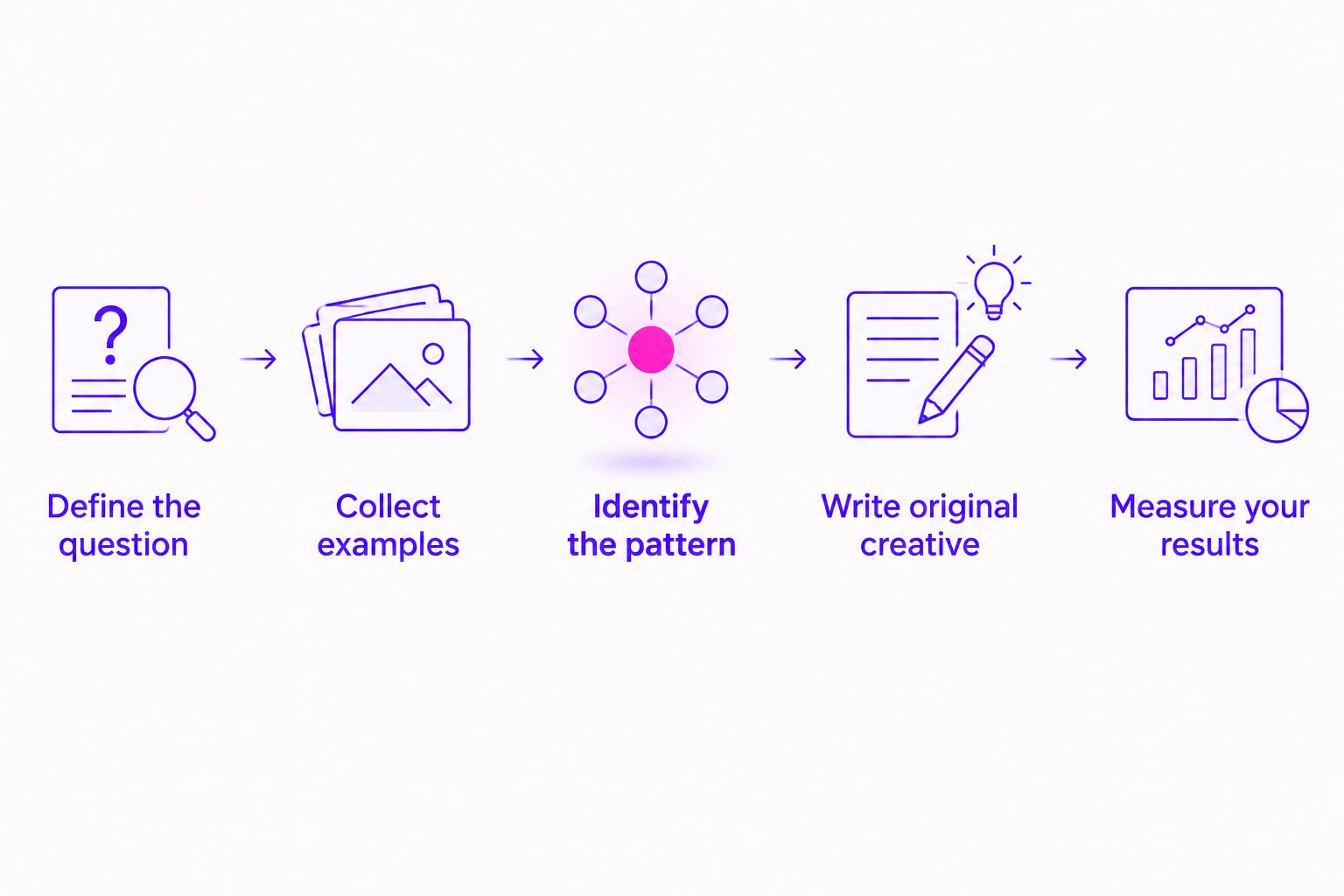
Give each research session a finish line. For your next session, try a 20-minute limit, save 5 ad examples, and draft 3 opening lines afterward. These are suggested working limits, not performance benchmarks.
The goal is to leave with something you can create. More saved examples do not automatically mean a clearer message.
Define the question
Choose one decision before opening a library. You might compare how teachers explain their approach, introduce evidence, or invite viewers to a workshop.
Avoid a vague brief such as finding successful ads. You cannot verify success from public creative alone.
Collect examples
Save the advertiser name, the observation date, and a short description of the message. Keep a clear distinction between the words you observed and your interpretation of them.
For a 2026 research file, date each note when you inspect the ad. That prevents an old observation from becoming an unsupported statement about what a competitor is doing now.
Identify the pattern
Describe the structure without copying the wording. An ad might name a familiar difficulty, explain a method, and offer a class as the next step.
That structure is a research insight. A competitor’s script, testimonial, or distinctive story is not yours to reuse.
Write original creative
Use your own teaching language, offer details, and supportable evidence. If you do not have a result you can substantiate, explain the learning experience instead of borrowing someone else’s outcome.
For example, describe what a workshop teaches rather than promising that every attendee will achieve the same personal transformation.
Measure your results
Choose the business outcome before publishing. A course campaign needs a connection between advertising activity and the next meaningful action, such as a registration, qualified application, or purchase.
Our guide to testing ad creative for coaching offers explains the next step after research: making a clear comparison within your own campaigns.
Keep observations separate from business results
An ad library cannot tell you whether an offer suits your business model. A webinar invitation, a direct course purchase, and a coaching application ask viewers to make different commitments.
Compare like with like. If your next step is a workshop registration, study how other ads explain the workshop’s value. Do not judge your invitation against a direct purchase ad without accounting for that difference.
The same care applies to claims. An advertiser’s public promise is evidence of their messaging, not evidence that the promise is true or appropriate for your audience.
For 2026 planning, keep competitor creative in your research notes and your own conversion data in your campaign decisions. Your results should determine what continues running.
Which YouTube ad research option should you choose?
Start with Google Ads Transparency Center if you are undecided. Pick a relevant advertiser, inspect the video messaging, and write one original test idea before adding another research tool.
Use VidTao when your specific problem is a shortage of creative examples. Use YouTube when you need to understand pacing and viewing context. Neither replaces measurement in your own account.
Ziva’s recommendation for YouTube ad research is to keep the process small enough to support action. Your research is ready when you can explain what you will test, why it fits your audience, and what result will guide the next decision.
FAQ
What’s the best ad spy tool for YouTube ads in 2026?
Google Ads Transparency Center is the best starting point for checking a known advertiser’s YouTube advertising. VidTao serves creative discovery, while YouTube itself adds viewing context.
Is VidTao better than Google Ads Transparency Center?
VidTao serves a different research task: discovering YouTube advertising examples. Google Ads Transparency Center is the stronger starting point when your task is checking a specific advertiser through Google’s own transparency resource.
Can I see a competitor’s ROAS with an ad spy tool?
Public ad creative does not reveal a competitor’s ROAS. Calculating ROAS requires advertising spend and attributed revenue, which a video example does not establish.
Can I use YouTube alone to research competitor ads?
YouTube alone is not a complete competitor ad research method. Your viewing experience is personalized, so combine direct observation with a searchable advertising resource.
Which research option should a spiritual coach start with?
A spiritual coach should start with Google Ads Transparency Center when researching a known advertiser. Study how the ad explains the offer and invites action, rather than treating its presence as proof of success.
How many competitor ads should I save before writing my own?
Start with five relevant examples as a practical working limit, not a required benchmark. Stop collecting when you can identify a useful pattern and write an original test.
Should I copy a competitor’s YouTube ad script?
No. Study the communication structure, then write with your own language, offer details, and supportable evidence. Another advertiser’s claims and testimonials do not become evidence for your business.
One last thing
The most useful example is not always the ad you like most. It is the ad that helps you explain your own offer more clearly.
Before closing your research file, finish this sentence: My next ad will help the viewer understand… If you cannot finish it specifically, narrow the question rather than collecting more videos.